WHAT IS HEBREW?
BABBLE ON
Because the Latin
and Greek fail us, many of us have come to question what the babblers
handed-down to us. (See Proverbs 18:17). Those who have searched the Eberith /
Hebrew texts know there are 3 variations of the Mashiak's Name found. The Greek
cannot form the proper transliteration of the letters yod hay uau shin ayin,
found 216 times in the TaNaK, and the Latin follows the Greek, so the world has
not known until recent decades Who they are calling on for their deliverance.
The shortest (diminutive) form of the name uses 4 letters, and is found one time
(yod shin uau ayin, at NekemYah 8:17). The text uses six letters in two
incidences, yod hay uau shin uau ayin, at Dt. 3:21 & Judges 2:7.
http://www.fossilizedcustoms.com/transliteration.html
We may all agree
on the Hebrew Name, but the tower of Babel caused Yahuah to confuse mankind's
speech, resulting in the current confusion.
The letters yod-hay-uau-daleth-tau
(YAHUDITH) form the word used at YashaYahu (Isaiah) 36:11 to describe the speech
/ language (tongue) that was understood by those hearing the Rabshakeh sent as a
messenger of doom from Babel. The Yahudim requested that he speak to them in
Aramith, apparently because they wanted to keep the general population from
understanding. Abram is referred to as haEberi (aka “the Hebrew”) at Barashith
14:13. Eber’s name is applied to those descended from him (as an ethnic
identification) as well as their script and language. Yahudah did not exist
until later, however the tribal descendants and their language Yahudith stem
from the man's name. The term Ebraidi (G1446) is transliterated (from Eberi) 11
times in the Natsarim Writings to describe the spoken language being used (see
Acts 22:2, 26:14).
Many translations
mistakenly use the word "Aramaic" in these verses, but rather Ebraidi is the
transliteration found. The language and the descendants speaking it were
identified with Eber, the progenitor of Abram. During the time of YashaYahu,
that same tongue was also known as Yahudith, as we see confirmed by Scripture.
New uploaded
video: BABBLE ON!
https://youtu.be/aCzTnW7RQBA
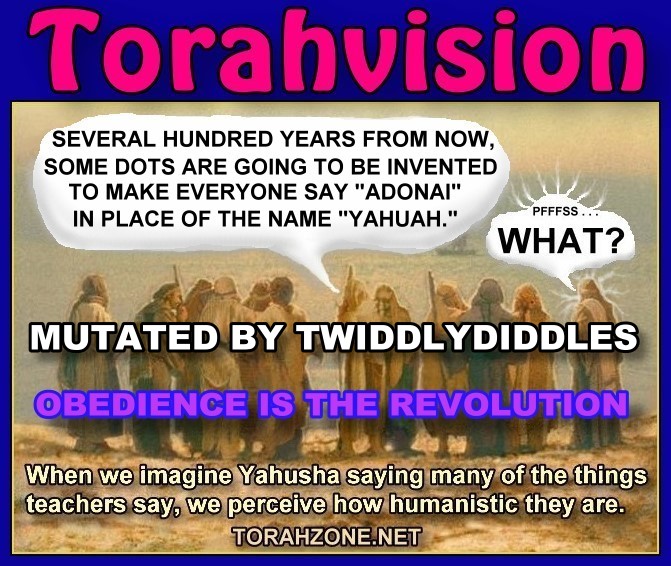
WHAT WAS WHISPERED IN THE INNER ROOMS?
THE NAME OF THE CREATOR, YAHUAH, WAS PRESERVED
FOR US IN THE DEAD SEA SCROLLS
THE KEY OF KNOWLEDGE IS THE STONE THE BUILDERS REJECTED:
THE NAME "YAHUAH" WRITTEN IN FOUR HEBREW VOWELS
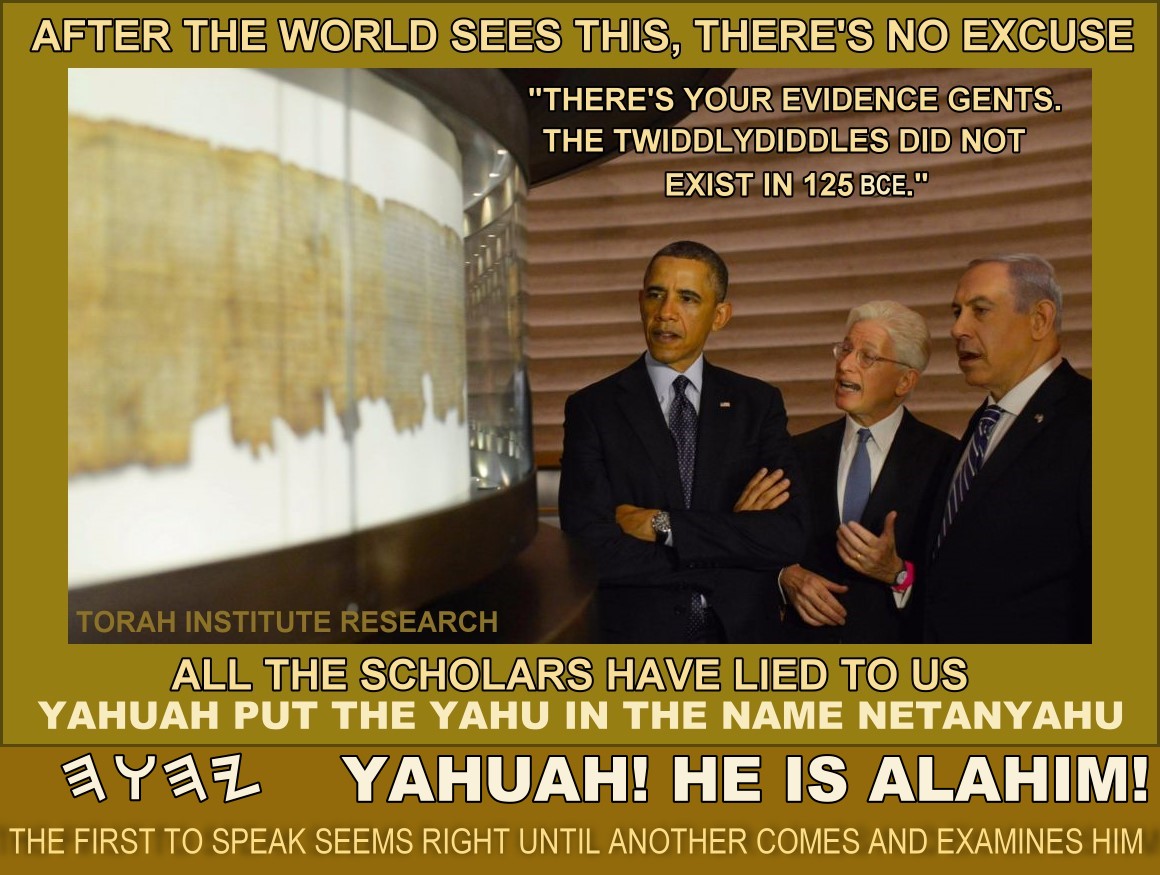
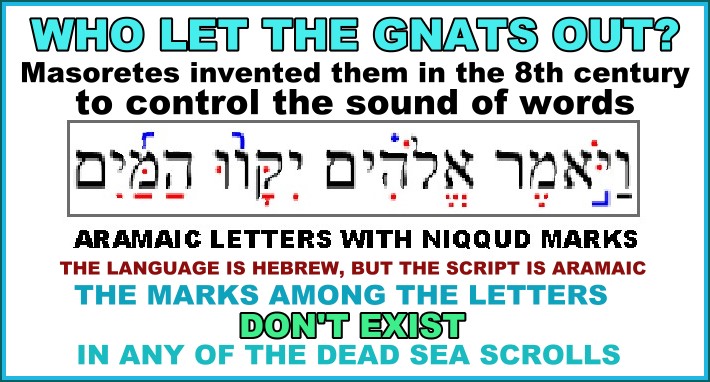
NO TWIDDLYDINKLES?
Hebrew Vowels & Phonology
Phonology is
the study of
the sound of a language.
In the case of the inspired Word of Yahuah, there has been a long-standing
resistance to uttering the Name.
In the 8th century, a sophisticated method using vowel
marks was developed, and it has been promoted successfully for many centuries
and is the official delusion now. It has been the primary lock keeping everyone
from calling on the Name.
We have the Key, and we’re the guardians of the Name.
We are the Natsarim, the first followers of Yahusha.
Here in the last days, Yahusha is awakening His bride, those having stored up
the extra oil of His Name. The conspiracy to conceal His Name is being shouted
from the rooftops.
This is the apostasy
(falling-away)
that must come first. (2 Thess. 2:3)
Are you feeling the urges from Yahusha to fall away from men's teachings?
One of the problems of getting to the Truth has always been a teaching authority
stepping in to make it seem the "lay person" doesn't have the capacity,
training, or permission granted to them to teach. This was how they treated
Yahusha, because He released so much Truth he was a threat to the fragile egos
of those controlling teachings. Yahusha is our Teacher, not traditions invented
by men. The Name is the Key of knowledge, the Rock rejected by the builders.
(Ps. 118:26)
A key has been hidden from the world that will unlock one of the highest things
of all.
This study explains the conspiracy to control how the Hebrew language sounds
using man-made efforts. It will prove there has been a constant effort to cause
the personal Name of our Creator to remain unknown by the average person.
Yahusha gave His pupils a mission to teach all nations to OBEY everything He
Commanded us to obey.
OUR MISSION IS THAT MESSAGE
We've LOST our way in this mission!
Teachings are out there claiming the
true Shabath day has been lost, or the knowledge of
the true sound of the Name, or the true genetic descendants of the Covenant.
There are even teachings claiming that Hadrian created a fake Yerushalem to keep
all the Yahudim from ever returning to the real one, which is claimed to be in
Africa, or South America, or that it was the lost Atlantis. Of all these "lost"
things, only one of them is prophesied to be rediscovered in the last days: the
Name of Yahuah.
Psa 102:18-22:
"This is written for a generation to come, So
that a people to be created praise Yah.
For He looked down From the height of
His set-apart place; From heaven Yahuah
viewed the arets,
To hear the groaning of the prisoner, To
release those appointed to death,
To declare the Name of Yahuah in Tsiyon, And
His praise in Yerushalem,
When peoples gather together, And reigns, to serve Yahuah."
Throughout time, those who placed themselves in authority over us have caused
everyone to howl (wail nonsense) rather than
pronounce the true Name of Yahuah.
The lock that was placed on His Name is being unlocked by the Key of knowledge
in these last days. In spite of all the efforts designed to conceal the Name, it
has not been lost. We are living in the times of restoration prophesied at Acts
3:19-21.
Soon the world will learn His Name is not Jesus, nor is it Isa, IESV, IHS, or
IXTHUS.
Translators replaced His Name with Kurios, Dominus, and LORD.
His Name is YAHUSHA, and it means
"I am your Deliverer."
RESTORATION TO WHAT IS INSPIRED
The goal here is to restore the Name of Yahuah to our
speech from the inspired Hebrew sources. This goal has been resisted for thousands of years.
Yahuah tells us through the prophet ZefanYah they have done
violence to His Torah. They also bent His language such that He promises to
restore it to a clean lip:
Zef 3:9:
“For then I shall
turn to the peoples a clean lip so that they all call on the Name of
Yahuah to
serve Him with one shoulder.”
YashaYahu 52:5:
“‘Those
who rule over them make them howl,’
declares
Yahuah,
‘and My Name is despised all day continually.’”
To Yahuah, we sound like we’re
howling.
A wise man once wrote:
"Men like the opinions to which they have been accustomed
from their youth; they defend them, and shun contrary views; and this is one of
the things that prevents men from finding truth, for they cling to the opinion
of habit."
- Guide For The Perplexed, Moses Ben Maimon / Rambam:
(1135-1204)
Now Your Real Training Begins
The Lamb Legacy Foundation is now actively accepting registrations to access its
Library. Register and look at what you've been missing in your search for Truth:
www.lamblegacyfoundation.com

TRANSLITERATION HYSTERIA
Transliterating transfers the letters of a language to
another, preserving the exact sound of the original language. The original
Hebrew words, even the
letters to spell those words, are inspired by Yahuah.
People don’t know what’s happened or why when they see
Abrahim spelled “Avraham”
or “Ibrahim.”
This Hebrew name begins with the letter ALEF, the letter “A.”
The first two letters are AB, not AV. Eber
and
Emmanual both begin with the letter AYIN, which may
be rendered as an E
or an
A depending on the word. Often
Eber and
Emmanual are erroneously spelled
Iber and
Immanuel.
On the Internet, people are spelling the city of peace “YAHrushalem”
and making up names like “marYAH”
and many others.
They hear yara (shoot) or yerak (moon) and falsely
perceive the sound of the Name, so they insert
Yah
into the word.
The confusion of Hebrew continues as if there are
aftershocks from the
mouthquake at the tower of Babel. The first two
letters of the city of Yerushalayim are yod-resh, not yod-hay, yet teachers are
spelling it as if the Name “Yah”
is in the word.
All this confusion is from a combination of reasons.
Hebrew should be understood as the language
(speech)
of the man Eber.
Yahuah’s Word refers to Hebrew by the term
EBRITH. As teachers attempt to teach Hebrew, the
original Hebrew script
is often ignored entirely, and they use the
Aramaic script while calling it “modern Hebrew.”
The Aramaic script was inherited from Babel in the days of NekemYah
(Nehemiah).
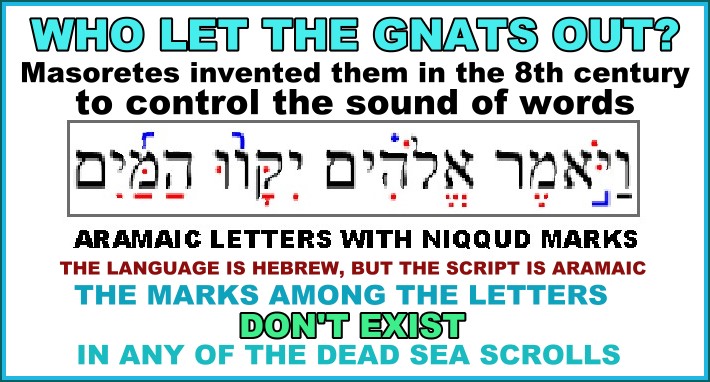
NIQQUD
- VOWEL MARKS
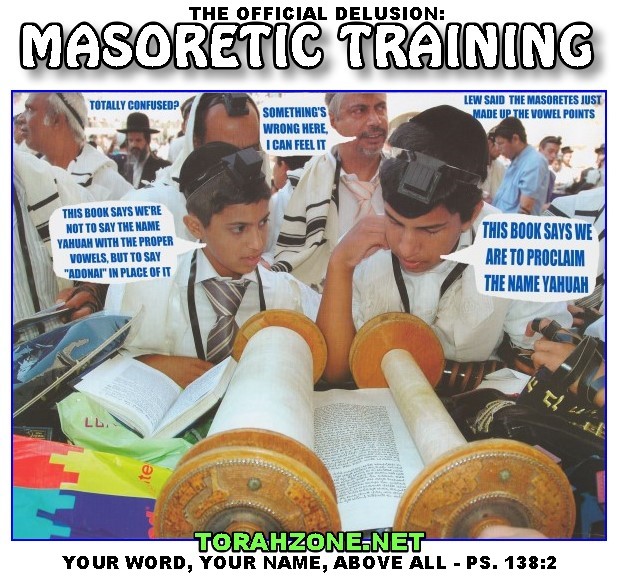
Teachers use vowel marks invented by the Masoretes to
cue readers how to sound the vowels in Hebrew words. They claim these symbols
(invented in the 8th century)
are necessary because “Hebrew has no written
vowels” -
but this is entirely false. People are blocked by
misinformation at every turn.
The Name Yahuah is written in four vowels:
yod-hay-uau-hay
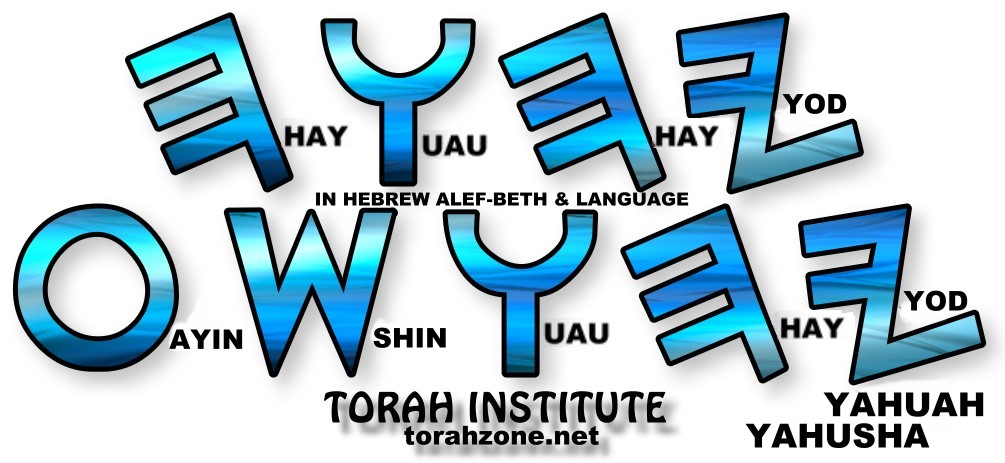
The Letters of the Name Are Vowels
YUSEF BEN MATITHYAHU, 1ST CENTURY HISTORIAN, SAYS THEY
ARE.
The historian called "Josephus" described seeing the four vowels written in
Hebrew letters on the headpiece of the kohen ha gadol: "A mitre also of fine
linen encompassed his head, which was tied by a blue ribbon, about which there
was another golden crown, in which was engraven the sacred [qodesh] Name [yod-hay-uau
-hay]: it consists of four vowels."
www.fossilizedcustoms.com/transliteration.html
Uttering the Name was forbidden during the Babylonian Captivity, and became
traditional practice.
The vowel-marks are intended to
stop the proper utterance of the Name, cueing the
reader to pronounce “adonai”
in place of the actual Name.
They admit this is so.
To utter the Name aloud was (and still is) considered
blasphemy, yet the niqqud distortions are the true blasphemy.
This is confirmed by the fact that in 2008 a papal bull was
issued that forbids the Name “Yahweh” in worship, song, or prayer.
The reason they give for this prohibition is to honor the
long-standing tradition to never pronounce the “ineffable” Name.

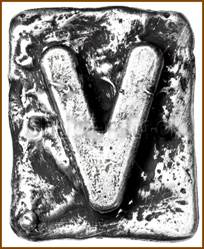
NO LETTERS V OR W IN HEBREW
The sixth letter of the Hebrew is heard in words like ABINU,
UYIQRA, DAUD,
YUSEF,
and the phrase HALLELU
YAH.
The Hebrew letter intended to sound as “U”
became the Greek
UPSILON, and retained the same original shape from
the ancient Hebrew.
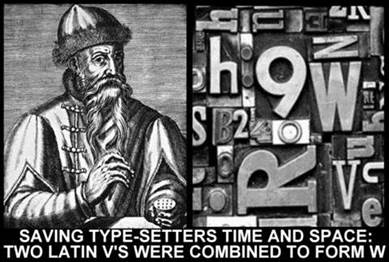
The letter “double-U” (VV)
appeared in the mid-1400’s by typesetters molding a single piece of metal type
with two Latin V-shaped letters to save time and space. The V-shape is the Latin
form for our current letter U,
and was not the Ashkenazic sound for “V” we know today. Hebrew was pronounced
just fine based on the written letters alone. Languages such as German mixed-in
with Hebrew. Yiddish is
a word meaning “Jewish.”
At 2Kings 18 the language of the Yahudim is referred to as
YAHUDITH.
The Assyrian speech is referred to as “ARAMITH.”
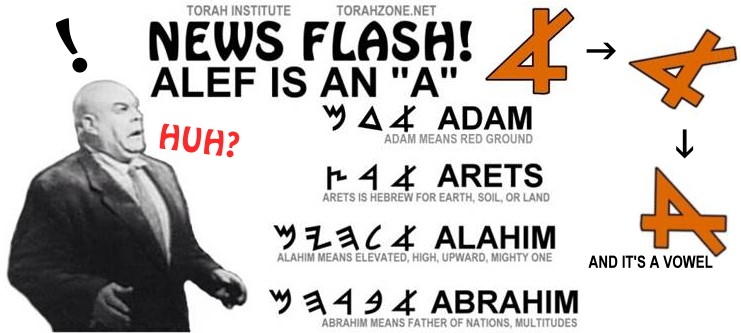
THE LETTER A
The Hebrew letter
ALEF
became the Greek
ALPHA,
and the Latin letter
A.
If we start a conversation about Hebrew phonology with anyone trained in the
rules and traditions of the Masoretes or Yiddish influences, we may hear
explanations about the second letter BETH having
two sounds, producing
Avraham
(for Abrahim). Both sides of such a debate feel the
other is mutilating the language, yet the
Arabs
have not altered the Hebrew name at all. They had no internal vowel-mark
specialists, nor were they expelled from their lands to live among foreign
language groups that added sounds that were not used in original Hebrew.
The Arabs speak Hebrew names and other original Hebrew words
very well, such as YUSEF, ABRAHIM, MIRYAM, ASHAH, ALI, AMINAH, YITSHAQ, YAQUB,
ABBA, UM, MALIK, and even the name YISHMAAL.
For those who appreciate how Hebrew once sounded, the
Arabs have preserved much.
This question came up concerning
the validity of this ancient Hebrew research:
Can you name a Hebrew or Aramaic scholar that agrees with
this?
My response:
You may be referring to scholars who rely on Masoretic
marks
(niqqud).
These symbols que a reader to pronounce vowels as suggested by those symbols
below the words. They use Aramaic script because that's what they were taught is
“modern” Hebrew.
Many repeat the claim that Hebrew has no written vowels.
Are these the
scholars you are referring to?
ALTERED VOWELS: THE OFFICIAL DELUSION
MASORETIC VOWELS ARE NOT INSPIRED
The
prophets wrote in Hebrew without the dots of the Masoretes because the Hebrew
letters were inspired perfectly already, and because the Masoretic marks didn't
exist.
The
point of the niqqud marks was far from keeping the phonology of Hebrew intact.
The vowel marks under the Name are admitted to be a cue to pronounce "ADONAI" in
place of the true four vowels the Name consists of.
NekemYah (Nehemiah) 8:8 gives us a perspective of how distorted things can get
in one generation, and my point is show how easy it is for the wheels to fall
off when we tweak things, and then defend those tweaks. We need to be made aware
of the tweaks, and if possible not become one of the tweakers, and not impede
the restoration process. As we restore more Truth, all the dross will fall away
from our behavior.
We
use transliteration of the Hebrew language as we write Hebrew words among our
English words, although many wrestle over spelling. The language can be a
separate thing from the script, or it can match.
"They read
from the sefer Torah of Alahim, translating to give the sense so that they
understood the reading." -
NekemYah 8:8
NIQQUD -
VOWEL MARKS
Teachers use vowel marks invented by the Masoretes to cue readers how to sound
the vowels in Hebrew words. They claim these symbols (invented in the 8th
century) are necessary because “Hebrew has no written vowels”
- but this is entirely
false.
The
Name Yahuah is written in four vowels, yod-hay-uau-hay. Uttering the Name
was forbidden during the Babylonian Captivity.
The
vowel-marks are intended to stop the proper utterance of the Name, cueing
the reader to pronounce “adonai” in place of the actual Name. They admit
this is so.
To
utter the Name aloud was (and still is) considered blasphemy, yet the niqqud
distortions are the true blasphemy.
This is confirmed by the fact that in 2008 a papal bull was issued that
forbids the Name “Yahweh” in worship, song, or prayer.
The
reason they give for this prohibition is to honor the long-standing tradition to
never pronounce the “ineffable” Name.
YISHARAL or YASHARAL?
The official transliteration “Israel” is from the letters yod-shin-resh-alef-lamed:
YISHARAL.
This word doesn't have the root YASHAR (straight,
upright)
in it, and yet we are often seeing it transliterated YASHARAL. The first letter
yod is a prefix adding the meaning
to -
joined with the root
SHAR
(rule, ruler). The suffix letters
alef-lamed (meaning lofty one) shows we co-rule with Alahim.
The word Yisharal literally means "to co-rule with Alahim."
YAHUAH IS NOT AN EGYPTIAN MOON DEITY
Some are now teaching the Name Yahuah is based on the name
of an Egyptian Moon deity, Aah,
because they think they hear a similarity. They try to use foreign languages to
explain the Hebrew language, and folks are believing whatever they hear. Be very
careful how you listen. Yahusha wouldn’t ever say most things teachers teach.
“The
simple believes every word, but the clever one
watches his step.”
Prov. 14:15
The city called Jericho contains
the word for moon, YARAK
(H3394, YOD-RESH-HETH).
Teachers are hearing the sound of YAH in completely unrelated words. They
mistake the words Marya
(master)
and Yerushalem to be marYAH and YAHrushalem.
JERUSALEM
-
IR + SHALOM, or YERUSHALEM
Spelling: yod-resh-uau-shin-lamed-mem
The root letters yod-resh mean
city.
The spelling
YAHrusalem
is incorrect.
The word means city of peace. Some distort the yod-resh as
UR.
The words IRAN and IRAQ stem from the Hebrew word for
city,
IR.
These errors are due to mixing (or ignoring) Hebrew
word-roots. People also relate to Hebrew words with
secret codes by the processes of Kabbalah, gematria, and numerology.
Summing the values of words to force them to be related to
other words is wormwood.
We are swimming in information while drowning in ignorance. Some are misled to
believe certain good clean Hebrew words should not be spoken
(Ex. 23:13) because they were adopted as names for
pagan deities, as in the case of ADON and AL.
If we are not calling on the pagan deity, the original
Hebrew word is just fine, there’s no cause for concern.
SHUA and SHA
The Hebrew letters shin-uau-ayin
(SHUA) and
shin-ayin (SHA)
are used in Scripture. How they are used informs us how to apply the proper
meaning.
Shua may mean riches, or in other cases desolation or
wickedness. We don't apply every meaning a word can
have to every situation we find a word.
It may simply mean help
or
rescue, as it is based on the root
YASHA, spelled
yod-shin-ayin. The prophet "ISAIAH" uses this root
as the first part of his name, which is best transliterated YASHAYAHU. SHUA or
SHA may be used as a suffix as in
ALISHA
(Elisha) or YAHUSHA
/ YAHUSHUA.
In these words the SHA component means
deliverance, but not riches or desolation.
When we use a concordance mindlessly without considering
the context a word is used in, it can result in outlandish ideas in translation.
In a certain situation, a Hebrew-speaking person might
"cry out for help" by shouting
shua! shua!
When used in another context the word may mean something completely different.
The Talmud renders the Name of Yahusha as “JESCHU” (YESHU) to secretly represent
the acronym Y.E.SH.U. which stands for yemak shmo U’zikro, meaning “may his name
be blotted-out.”
The Latin Vulgate altered the true Name to IESV, and the KJV
version used it as their platform to translate into English.
Homonyms are words
spelled the same, but have different meanings in their use. Examples in our English words are:
address, arm, bark, lie, rock, or
pitcher.
If a sentence uses the word pitcher, we must consider the
context to determine whether the word refers to a man throwing a ball,
or a vessel to hold a liquid.
UAU or VAV?
The sixth letter UAU may be used as a connective as we use
our word “and.” It operates as the same as our letter
U, but many are taught it has the sound of our
modern letter, double-U (W).
In the development of the movable type printing presses, the Latin shape for U
was V. When a word required two V's next to one another (VV, as in certain words
like VVitch, VVicked) they had to use two pieces of metal type. The history of
the letter W (double-U) reveals how it developed from typesetters molding a
single piece of metal type to form the new "double-U" - and this occurred in the
mid-1400's with the movable type printing presses.
It’s hard to imagine the letter U being used as a consonant,
but the aftershocks from the tower of Babel makes anything possible!
Hebrew has undergone brutal attacks from both within and without, and the idea
that some vowels “double” as consonants is now an accepted belief.
The idea of double letters emerged as new foreign sounds were added to Hebrew
words, like the new sound
VAV.
New sounds became adopted into the Hebrew lingo within the
last 300 years, as French and Germanic influences took their toll on the
Yiddish language (a new word meaning “Jewish”).
All Hebrew vowels are
written
letters, and they were adopted by the Greek alphabet as the vowels
AEIOU.
The Greek vowels became the Latin vowels we use today.
You’re reading this text in Latinized Greek letters, in
case you didn’t realize it.
People claim there are all sorts of “rules” about Hebrew,
but they only defend what has changed in the language over time
because they were taught that way.
Remember what Moses Ben Maimon said about “the opinion of
habit” (TRADITION)
quoted on the first page. In truth, there is no such Hebrew letter as VAV, nor
is there a Hebrew sound as we understand our current letter “V.”
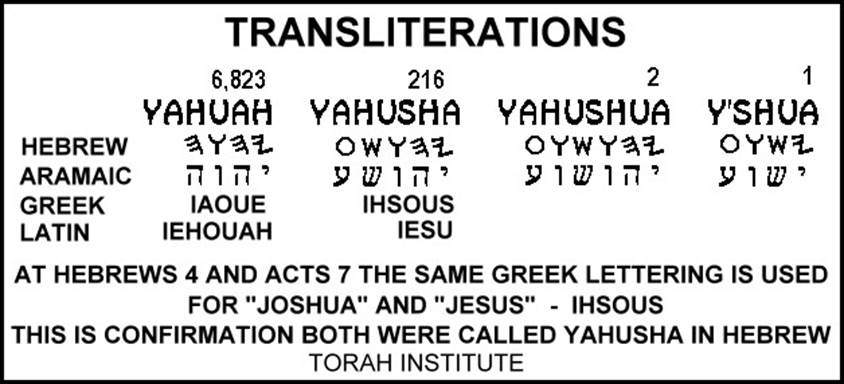
THERE’S ONE NAME OF DELIVERANCE;
IT’S HEBREW
As Kefa and Yahukanon stood before the Sanhedrin, they
were forbidden to ever speak in the correct Name,
Yahusha.
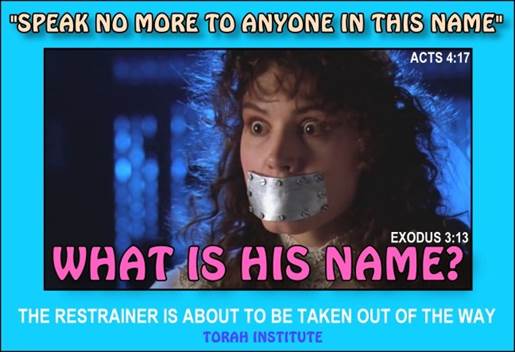
Act 4:12: “And
there is no deliverance in anyone else, for there is
no other Name under the heaven given among men in which we
need to be delivered.”
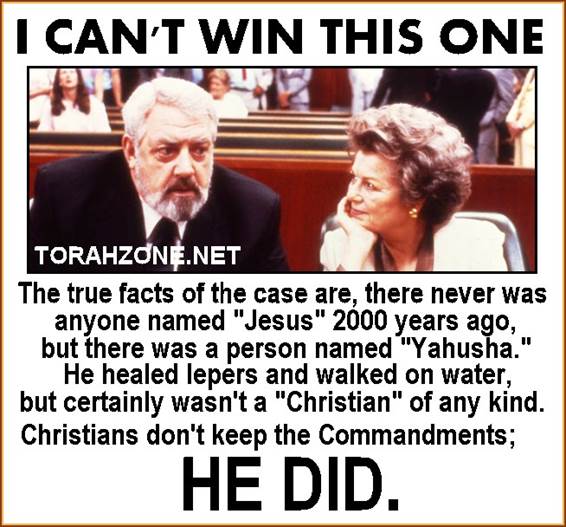
It could not have been Jesus, this word did not exist at
that time, and is not a Hebrew name. Yahusha’s Name means “I am your Deliverer.”
His followers were not writing in Greek. Hebrew is
mentioned 11 times in the Natsarim Writings; Aramaic 0
times.
TIMES OF RESTORATION ARE HERE
Act 3:19-21:
“Repent therefore and turn back for the blotting out of your sins, in order that
times of refreshing might come from the presence of the Master, and that He sends Yahusha
ha’Mashiak
pre-appointed for you, Whom heaven needs to receive until the times of
restoration of all
things,
of which Alahim spoke through the mouth of
all His set-apart prophets since of old.’”
Yahuah is
restoring
what was
spoken in these last days prior to Yahusha’s return
so we will call on His Name.
The corruption, stains, rips, blotches, and wrinkles
in the bride’s garments
(behavior) are being ironed, refined, and cleansed.
We are returning to our first love, and holding to His Covenant of love, the Ten
Commandments.
Our lips are part of the repair. He is touching our
lips so we might CALL on His Name.
The
written
Word in the
Hebrew letters are
are inspired;
the niqqud marks and the rules men invented are not. The letters are
symbols preserving not only what the pictographic
meaning is, but they also preserve the
sounds the letters make so generations
yet to be born
may
call on the true Name,
Yahuah.
The purpose for which they were
written
is found in the Scripture of Truth:
“This
is written for a generation to come, so
that a people to be created praise Yah. For He
looked down from the height of His set-apart place; From heaven
Yahuah
viewed the arets, to hear the groaning of the prisoner, to release those
appointed to death, to declare the Name of Yahuah in Tsiyon, and His praise in
Yerushalem when peoples gather together, and reigns, to
serve Yahuah.”
Ps. 102:18-22
The lock on His Name is unlocked by the
key of knowledge:
Yahusha.
The key was never lost, but it was hidden by men.
Yahusha has given His Natsarim the keys of His reign.
“The
stone which the builders rejected has
become the chief corner-stone.”
- Ps. 118:22
BARUK HABA BASHEM YAHUAH
His Name is the key of knowledge: use it.
SCRIPTURE WAS INSPIRED IN THE HEBREW LANGUAGE & SCRIPT:
MatithYahu (Matthew) was originally written in Hebrew, and this is attested to
by the early circus "fathers" at the school of Alexandria.
From the Greek writings of Epiphanius
we read this translation into English:
"But these sectarians... did not call themselves Christians, but "Natsarim," ...
However they are simply complete Jews. They use not only the New Testament but
the Old Testament as well, as the Jews do... They have no different ideas, but
confess everything exactly as the Law proclaims it and in the Jewish fashion--
except for their belief in Messiah, if you please! For they acknowledge both the
resurrection of the dead and the divine creation of all things, and declare that
G-d is one, and that his son is Y'shua the Messiah. They are trained to a nicety
in Hebrew. For among them the entire Law, the Prophets, and the... Writings...
are read in Hebrew, as they surely are by the Jews. They are different from the
Jews, and different from Christians, only in the following. They disagree with
Jews because they have come to faith in Messiah; but since they are still
fettered by the Law -- circumcision, the Sabbath, and the rest-- they are not in
accord with Christians...they are nothing but Jews...They have the Good News
according to Matthew in its entirety in Hebrew. For it is clear that they still
preserve this, in the Hebrew alphabet, as it was originally written." (Epiphanius;
Panarion 29)
Hebrew is mentioned 11 times in the Natsarim Writings; Aramaic 0 times.
Act 21:40:
“And having given him permission, Paul, standing on the stairs motioned with his
hand to the people. And when there was a great silence, he spoke in the
Hebrew language, saying,
Act 22:1:
“Men, brothers, and fathers, hear my defense before you now.”
Act 22:2: “And when they heard that he spoke to them in
the Hebrew language, they kept
greater silence. . .”
Act 26:14:
“And when we had all fallen to the ground, I heard a voice speaking to me, and
saying in the Hebrew
language, ‘Shaul, Shaul, why do you
persecute Me? It is hard for you to kick
against the prods.’
THERE’S ONLY ONE NAME, AND IT’S HEBREW
Remember Acts 4:12
When Kefa and Yahukanon were taken before the Sanhedrin, it was because the
control-freaks didn’t want anyone using the correct Name.
Act 4:12: “And there is no
deliverance in anyone else, for there is no other Name under the heaven given
among men by which we need to be saved.”
It could not have been “JESUS,” this did not exist at that time, and is not a
Hebrew
name. Yahusha means “Yah is our Deliverance,” or better “I am your Deliverer.”
RESTORATION TO THE HEBREW TONGUE
(ZEPH 3:9)
Act 3:19-21:
“‘Repent therefore and turn back, for the blotting out of your sins, in order
that times of refreshing might come from the presence of the Master, and that He
sends Yahusha
ha’Mashiak, pre-appointed for you, Whom heaven needs to receive until the times
of restoration of all matters, of which Alahim spoke through the mouth of
all His set-apart prophets since of old.’”
How Did Abrahim Pronounce ALAHIM?
We have to pass the test of love to receive this
shibboleth (the fruit-bearing part of a plant, see more about this at
www.fossilizedcustoms.com/shibboleth.html).
Take the A as we hear it as a short sound in
ABBA, and the LAH - this produces the very same sound we hear the Muslims
pronouncing “allah.” ALAHIM is the same situation. The Arabs have been saying it
correctly all along. AMN is AMAN (true, truly). They also pronounce ALI
correctly. Abrahim's language has
never been lost, Yahuah preserved it so we would be restored to the pure lip.
THE LANGUAGE OF ABRAHIM
Arabs retain a much more accurate phonology of
Hebrew (the language of Eber and Abrahim) because they’ve always spoken it. They
were never scattered into the nations to corrupt their speech. They name their
children proper Hebrew names like Danial, Yusef, Yakub, Tamar, Zara, Ashah,
Aliyah, Aquila, Daud, and dozens more. They preserve the Hebrew name Ali, which
was distorted slightly by the Masorete's vowels.
Today it is commonly seen as Eli.
Their spiritual practices and customs are highly
idolatrous. Any bowing to images is an abomination. The moon deity of Muhammad’s
clan was highly preferred. He claimed Allah "the greatest." The term alah may
refer to any deity, it is not a proper noun (a name). It’s still a clean Hebrew
word, spelled ALEF-LAMED-HAY. It is found more often in the book of Danial than
any other place in Scripture.
Their alah (aka god) is not our Alah (aka God).
We should know that the term "God" originates as a
pagan term, in fact a name for the Sun. It was adopted from Teutonic pagans by
Christianity and applied to the Supreme Being. The 1945 Encyclopedia Americana
has this to say under to topic GOD:
"GOD
(god) Common Teutonic word for personal
object of religious worship, formerly applicable to super-human beings of
heathen myth; on conversion of Teutonic races to Christianity, term was applied
to Supreme Being."
The first “super-human” ever worshipped was
Nimrod, Babel’s Great Architect, the builder of the Tower.
The point is, we should not use the term "god"
because of its origin; but we may restore the term alah to our speech in its
place. The term has nothing to do with Islam, the moon, crescents, domes,
circumambulating, prayer beads, or kneeling down on a mat facing Makkah. Yahuah
forbids bowing to images, pillars, bread, other people, or whatever objects men
may fabricate with their hands.
Yahuah Alahim is not the same being as the Allah
of Islam. The Arabs inherited the culture of India’s Shiva worship. Shiva is the
destroyer, called Abaddon in Hebrew, and Apollyon in Greek.
The Kaba (cube) is called the house of Allah, and
is a Shiva shrine men are trained to walk around in a circle. They touch or
salute a shivalingam/yoni object as they make each pass around it, much like one
passes “GO” on a monopoly board. They have no idea what they are doing is an
offense to Yahuah.
All Muslims know the term Allah is not a name, but
a pronoun meaning “the god.” First let’s learn a little more about the Hebrew
origin of the word alah.
Restoring the
letter A to Alahim (seen today as Elohim) does not associate the
word (alef-lamed-hay) with Islam,
although that may be a normal person’s initial reaction. It’s a Hebrew word
found in Scripture, easily found in the first chapters of Danial (note
Danial here is spelled more
accurately).
This
statement tells us the Name of Yahuah is not widely known among men:
"Wherever I cause My Name to be remembered, I
will come to you and bless you." (See Shemoth / Ex. 20:24)
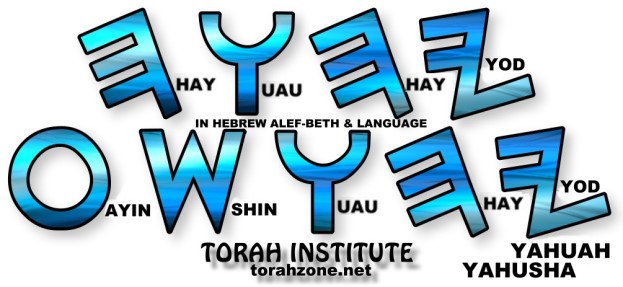
Flavius Josephus
(Yusef Ben MattithYahu)
wrote how he had seen the headpiece of the Kohen ha’Gadol
(High Priest).
He said he saw the Name written in four Hebrew vowels.
This means he did not see it written in Aramaic, the script of Babel brought
back from the 70-year captivity.
The vowels he saw were YOD-HAY-UAU-HAY. There were no niqqud marks
(dots, dashes, and cantillation marks)
because the Masoretes did not corrupt the language until these were invented and
forced on the language between the 7th and 11th centuries CE.
Some written Hebrew letters double as vowels or consonants, such as the YOD and
HAY.
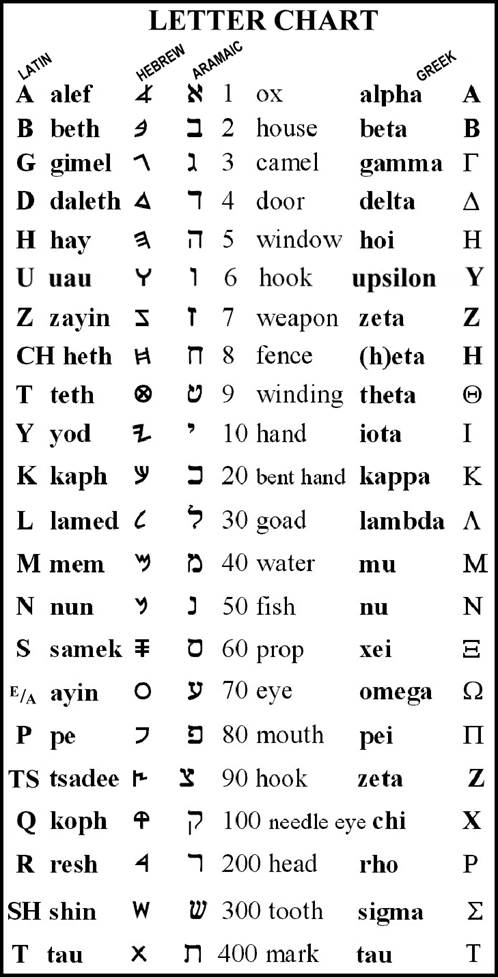
The Greek vowels come directly from ancient Hebrew's written vowels, ALEF, AYIN,
HAY, UAU, and YOD.
The Hebrew letter UAU, written as a character similar to the shape Y, became the
Greek UPSILON, our letter U. The Latin inherited the UPSILON
(shaped Y)
and dropped the lower stem, so the letter appears as V
(GLADIVS is actually pronounced "GLADIUS").
We write English in Latin letters. We understand the vowels are AEIOU,
and sometimes Y and W. Some letters did not exist until recent
centuries because they evolved from other letters.
The letters J, W, and V have developed within the last 600 years. The letter
"double-U"
(VV)
is about 600 years old.
As the printing press was developing, typesetters used the letter U, but it was
shaped V from the Latin. When Old English words like VVITCH, VVICK, or VVHITE
were printed, a shrewd typesetter invented a single piece of metal type using
two V's side-by-side, and so the letter "double-U" was invented.
Modern Hebrew has inherited the corrupted influences of the Masoretes, a Karaite
sect of traditionalists who abhorred anyone pronouncing the Name YAHUAH
aloud. They invented vowel markings called NIQQUD to misdirect the sound of
words. YAHU became YEHO, and ALAHIM became ELOHIM.
ABRAHIM begins with an ALEF, and so does ALAHIM. The Arabs pronounce Hebrew
words more accurately than modern Yahudim do.
They name their children Ashah (not
Ishah) Daud (not
David)Yaqub (not
Jacob) Yusef (not
Joseph)
and refer to the Creator as ALAH - a pronoun, not a personal name.
This is not to say their theology is correct, only their language.
(see book "Who Is Allah?")
Modern Hebrew inherited outsiders' distortions as well.
The use of the so-called modern Hebrew letter "V" for the letter BETH, as well
as the letter UAU, are examples.
The phrase "HALLELU YAH" uses the letter UAU (same as the Greek UPSILON or our
letter U). If we put the new letter sound we know as "V" into words, they become
nonsense: YAHVAH, HALLELVYAH, YAHVDAH; the letters U, V, and W are next to one
another in our "alphabetical" or "alefbethical" order, and the U produced the
new letters V and W. Look up the history of the letters V and W, and prove to
yourself these things are true.
U or W?
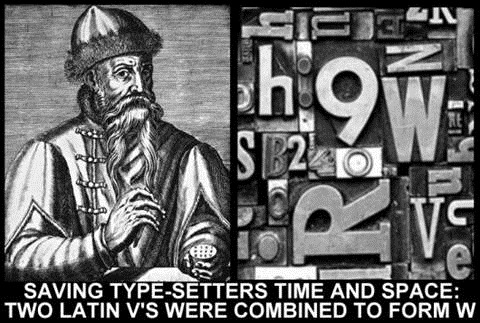
The letter W was invented by combining two Latin letters shaped V.
Type-setting was done by hand, so this saved time and space.
The Latin V functioned as our modern letter U.
The Name of our Creator is better transliterated "YAHUAH" than the traditional
YAHWEH, and aligns with the Hebrew letters which did not have the letter W
(double-U). Even Clement of Alexandria's Greek transliteration for the Name was
IAOUE (no W, it didn't exist yet).
The truth is upsetting not because it's true, but because the lie isn't.
This should not be nearly as disturbing as it was when it was announced the
Earth is round. The Catholic Johannes Gutenberg was a German Catholic, living
from 1398 to 1468. During his lifetime it was generally believed the Earth was
flat. Today there are many people promoting the idea the Earth is flat, ignoring
the photographs and operating satellites that make the Internet work for them.
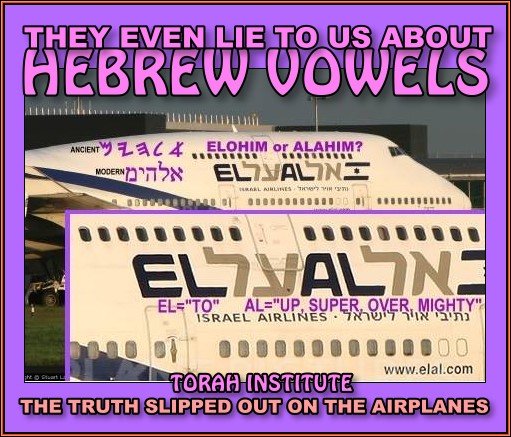
AL, EL, or YL?
Studies are floating around the Internet claiming the word “EL” was originally a
Kananite deity adopted by Yahuah’s people.
This “report” is highly specious, and I’ve been aware of it for at least 20
years. The gentleman who originally promoted it fell for the so-called “E” and
“J” sources promoted by atheist archaeological scholars.
The writer tries to confuse the letter A (alef) with the letter Y (yod), and
claims the Hebrew word ALAHIM is Kananite.
In one of the sources he quoted from, the writer claimed the Tetragrammaton
consisted of “four consonants,”
but the letters yod-hay-uau-hay are four vowels.
Yusef Ben MatithYahu (Flavius Josephus) referred to these same letters as
vowels.
Clement of Alexandria transliterated the Tetragrammaton into the Greek vowels
IAOUE, “YAH-U-AH.”
Hebrew has written vowels, that’s were we get our vowels from, A E I O U
(alef, ayin, yod, uau). Hebrew vowels have short and long forms just as ours do.
The writer tries to confuse the letter A with the letter Y, and claims the
Hebrew word ALAHIM is Kananite.
The Kananites were mostly illiterate chalcolithic-period inhabitants of the land
Yahuah gave to Abrahim.
The Hebrew texts clearly show the letter ALEF ( A ) in the pronoun ALAHIM (Elohim
if Masoretic vowel-points are employed).
The man spells his own name Israyl (with a Y rather than the proper
letter A) as if the word is spelled yod-shin-resh-yod-lamed.
The word is spelled yod-shin-resh-alef-lamed
(YISHARAL).
CONFUSING WORD ROOTS
The Internet has many teachers confusing Hebrew roots.
The new most popular transliteration is YASHARAL, causing people to think they
see the word YASHAR (upright, just) or ASHAH (woman).
The word YISHARAL uses the root SHAR - ruler, from which we derive our
word sheriff - with a prefix letter yod, meaning “to carry forward as.”
The suffix is alef-lamed (AL), not yod-lamed (YL).
The Kananites took the pronoun AL and made it a proper noun (a name), and this
was never a name until they made it one.
The same is true of the Hebrew word adon, which simply means “sovereign.”
Pagans invented words based on Hebrew words which were not names before.
SCRIPTURE WAS INSPIRED IN THE HEBREW LANGUAGE & SCRIPT WITHOUT MARKS
INVENTED BY PEOPLE STEERING THE PRONUNCIATION
MatithYahu (Matthew) was originally
written in Hebrew, and this is attested to by the early circus "fathers" at the
school of Alexandria.
From the Greek writings of
Epiphanius we read this translation
into English:
"But these sectarians... did not
call themselves Christians, but "Natsarim," ... However they are simply complete
Jews. They use not only the New Testament but the Old Testament as well, as the
Jews do... They have no different ideas, but confess everything exactly as the
Law proclaims it and in the Jewish fashion-- except for their belief in Messiah,
if you please! For they acknowledge both the resurrection of the dead and the
divine creation of all things, and declare that Alahim is one, and that his son is Yahusha
ha'Mashiak. They are trained to a nicety in Hebrew. For among them the
entire Law, the Prophets, and the... Writings... are read in Hebrew, as they
surely are by the Jews. They are different from the Jews, and different from
Christians, only in the following. They disagree with Jews because they have
come to faith in Messiah; but since they are still fettered by the Law --
circumcision, the Sabbath, and the rest-- they are not in accord with
Christians...they are nothing but Jews...They have the Good News according to
Matthew in its entirety in Hebrew. For it is clear that they still preserve
this, in the Hebrew alphabet, as it was originally written." (Epiphanius;
Panarion 29)
Hebrew is mentioned 11 times in the Natsarim Writings; Aramaic 0 times.
Act 21:40:
“And having given him permission, Paul, standing on the stairs motioned with his
hand to the people. And when there was a great silence, he spoke in the
Hebrew language, saying,
Act 22:1:
“Men, brothers, and fathers, hear my defense before you now.”
Act 22:2: “And when they heard that he spoke to them in the
Hebrew language, they kept greater silence. . .”
Act 26:14:
“And when we had all fallen to the ground, I heard a voice speaking to me, and
saying in the Hebrew language, ‘Shaul,
Shaul, why do you persecute Me? It is
hard for you to kick against the prods.’
THERE’S ONLY ONE NAME, AND IT’S HEBREW
Remember Acts 4:12:
When Kefa and Yahukanon were taken before the Sanhedrin, it was because the
control-freaks didn’t want anyone using the correct Name.
Act 4:12:
“And there is no
deliverance in anyone else, for there is no other Name under the heaven given
among men by which we need to be saved.”
It could not have been “JESUS,” this did not exist at that time, and is not a
Hebrew
name. Yahusha means “Yah is our Deliverance,” or better “I am your Deliverer.”
Take the A as we hear it as a short sound in ABBA,
and the LAH - this produces the very same sound we hear the Muslims pronouncing
“allah.” ALAHIM is the same situation. The Arabs have been saying it correctly
all along. AMN is AMAN (true, truly). They also pronounce ALI correctly.
Abrahim's language has never been
lost, Yahuah preserved it so we would be restored to the pure lip.
THE LANGUAGE OF
ABRAHIM
Arabs retain a much more accurate phonology of
Hebrew (the language of Eber and Abrahim) because they’ve always spoken it. They
were never scattered into the nations to corrupt their speech. They name their
children proper Hebrew names like Danial, Yusef, Yakub, Tamar, Zara, Ashah,
Aliyah, Aquila, Daud, and dozens more. They preserve the Hebrew name Ali, which
was distorted
slightly by the Masorete's vowels.
Today it is commonly seen as Eli.
Their spiritual practices and customs are highly idolatrous. Any bowing to
images is an abomination. The moon deity of Muhammad’s clan was highly
preferred. He claimed Allah "the greatest." The term alah may refer to any
deity, it is not a proper noun (a name). It’s still a clean Hebrew word, spelled
ALEF-LAMED-HAY. It is found more often in the book of Danial than any other
place in Scripture.
Their alah (aka god) is not our Alah (aka God).
We should know that the term "God" originates as a pagan term, in fact a name
for the Sun. It was adopted from Teutonic pagans by Christianity and applied to
the Supreme Being. The 1945 Encyclopedia Americana has this to say under to
topic GOD:
"GOD (god)
Common Teutonic word for personal object of religious worship, formerly
applicable to super-human beings of heathen myth; on conversion of Teutonic
races to Christianity, term was applied to Supreme Being."
The first “super-human” ever worshipped was Nimrod, Babel’s Great Architect, the
builder of the Tower.
(see book
Nimrod's Secret Identity)
The point is, we should not use the term "god" because of its origin; but we may
restore the term alah to our speech in its place. The term has nothing to do
with Islam, the moon, crescents, domes, circumambulating, prayer beads, or
kneeling down on a mat facing Makkah. Yahuah forbids bowing to images, pillars,
bread, other people, or whatever objects men may fabricate with their hands.
Yahuah Alahim is not the same being as the Allah of Islam. The Arabs inherited
the culture of India’s Shiva worship. Shiva is the destroyer, called Abaddon in
Hebrew, and Apollyon in Greek.
The Kaba
(cube) is called the house
of Allah, and is a Shiva shrine men are trained to walk around
in a circle.
They
touch or salute a shivalingam/yoni object as they make each pass around it, much
like one passes “GO” on a monopoly board. They have no idea what they are doing
is an offense to Yahuah.
All
Muslims know the term Allah is not a name, but a pronoun meaning “the god.”
First let’s learn a little more about the Hebrew origin of the word alah.
Restoring the
letter A to Alahim (seen today as Elohim) does not associate the
word (alef-lamed-hay) with Islam, although that may be a normal
person’s initial reaction.
It’s a Hebrew word found in Scripture, easily found in the first chapters of
Danial
(note Danial here is spelled more
accurately).
This statement
tells us the Name of Yahuah is not widely known among men:
"Wherever I cause My Name to be remembered, I will
come to you and bless you." (See Shemoth / Ex. 20:24)
YAHUSHA: YAHUAH + THE SUFFIX MEANING DELIVERER, SHA
SHUA and SHA are Hebrew components that need context to be understood properly.
The Hebrew letters shin-uau-ayin and shin-ayin are used in Scripture. As a noun,
the context informs us how to apply the proper meaning. The context may call for
it to mean riches, or in other instances desolation or wickedness. We don't
apply every meaning a word can have to every situation we find a word. It may
simply mean help or rescue, as it is based on the root YASHA, spelled yod-shin-ayin. The prophet
known as "ISAIAH" uses this root as the first part of his name which is best
transliterated YASHAYAHU. SHUA or SHA may be used as a suffix to a name, as in
ALISHA (aka Elisha) or YAHUSHA / YAHUSHUA. In these names it modifies the names
with the concept of deliverance, but not riches or desolation. When we use a
concordance mindlessly, without considering the context the word is used in, we
can render some outlandish ideas in translation. We don't apply every possible
meaning a word may have to every situation we find it used in. In a specific
situation, a Hebrew-speaking person might "cry out for help" by shouting shua!
shua! In another context the word shua may mean something completely different.
Homonyms are words that may be spelled the same, but have different meanings in
their use. Examples in English words are: address, arm, bark, lie, rock, or
pitcher. If you were to design a sentence with the word "pitcher" in it, you
would need to consider the context to ascertain whether the word referred to a
man throwing a ball, or a vessel from which a liquid is poured.
Lew White
Torah Institute,
POB 436044, Louisville, KY 40253
502-261-9833
www.torahzone.net
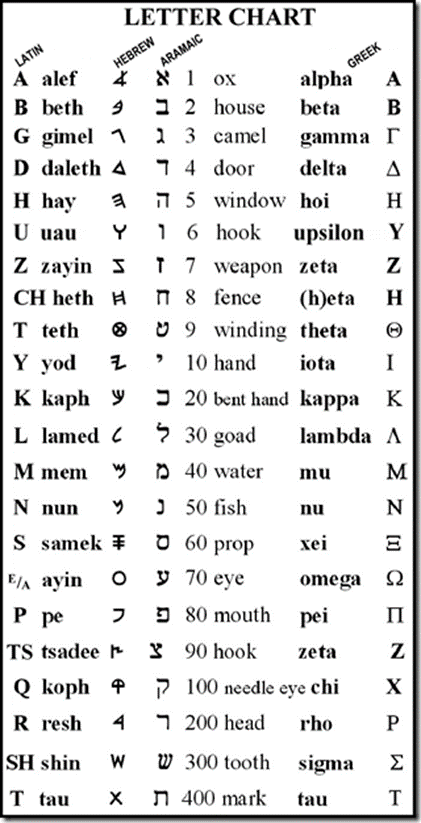
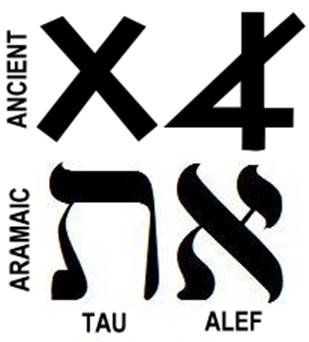
ANCIENT
HEBREW COMPARED WITH ARAMAIC:
LEXOMORPHOSIS
– a belief that letters transform into other letters.
Many teachers today have said there are "no written vowels in Hebrew." And yet,
Yusef Ben MattithYahu
(Flavius Josephus)
wrote in the first century that he had seen the golden headpiece worn by the
Kohen ha'Gadol, and he described how it was written in four vowels, in Hebrew
(not the square Aramaic script we usually see called "modern Hebrew").
Clement of Alexandria transliterated the Name using the Greek vowels IAOUE.
The Greek vowels come directly from ancient Hebrew's written vowels, ALEF, AYIN,
YOD, UAU (the last, UAU, written Y, became the Greek UPSILON, our letter U). The
Latin inherited the UPSILON (shaped Y) and dropped the lower stem, so the letter
appears as V (GLADIVS is actually pronounced "GLADIUS").
We write English in Latin letters. We understand the vowels are AEIOU,
and sometimes Y and W. Some letters did not exist until recent centuries because
they evolved from other letters. The letters J, W, and V have developed within
the last 600 years.
The letter "double-U" (VV) is about 600 years old. As the printing press was
developing, typesetters used the letter U, but it was shaped V from the Latin.
When Old English words like VVITCH, VVICK, or VVHITE were printed, a shrewd
typesetter invented a single piece of metal type using two V's side-by-side, and
so the letter "double-U" was invented.
Modern Hebrew has inherited the corrupted influences of the Masoretes, a Karaite
sect of traditionalists who abhorred anyone pronouncing the Name "YAHUAH" aloud.
They invented vowel markings called NIQQUD to misdirect the sound of words. YAHU
became YEHO, and ALAHIM became ELOHIM. ABRAHIM begins with an ALEF, and so does
ALAHIM. The Arabs pronounce Hebrew words more accurately than modern Yahudim do.
They name their children Ashah (not
Ishah), Daud (not David),
Yaqub (not Jacob),
Yusef (not Joseph), and refer to the
Creator as ALAH (a pronoun, not a personal name). This is not to say their
theology is correct, only their language.
Modern Hebrew inherited outsiders' distortions as well. The use of the so-called
modern Hebrew letter "V" for the letter BETH, as well as the letter UAU, are
examples. The phrase "HALLELU YAH" uses the letter UAU (same as the Greek
UPSILON or our letter U). If we put the new letter sound we know as "V" into
words, they become nonsense: YAHVAH, HALLELVYAH, YAHVDAH; the letters U, V, and
W are next to one another in our "alphabetical" or "alefbethical" order, and the
U produced the new letters V and W. Look up the history of the letters V and W,
and prove to yourself these things are true.
PALAEO-HEBREW LETTER
FORM OF THE NAME
YOD-HAY-UAU-HAY
The
prefix "palaeo"
means ancient,
archaic, or
older.
This
prefix is Greek, and
is often seen spelled
"paleo."
The Hebrew word for ancient is
ATTIQ, as in ATTIQ
YOMIN, the
Ancient of Days.
What we know as
"modern
Hebrew" is really the Aramaic script from
Babylon, brought back
with the returning Yahudim after their
70-year
captivity.
The
newer letter shapes
were adopted by the Yahudim from the
Babylonians, causing a
shift away from the
older Hebrew
characters used by
Mosheh, Daud (David), Shalomoh (Solomon),
YeshaYahu (Isaiah),
and many others.
The new copies made
from the older texts
became transformed
into the Babylonian
characters, except for
the NAME, which the
first copyists
preserved with great
respect in their
original ancient
form.
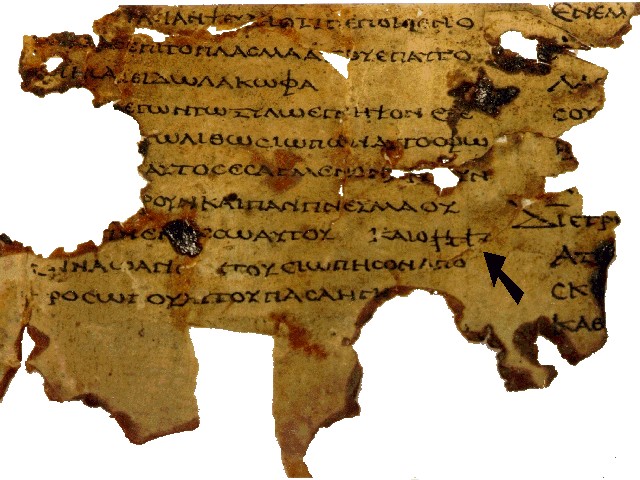
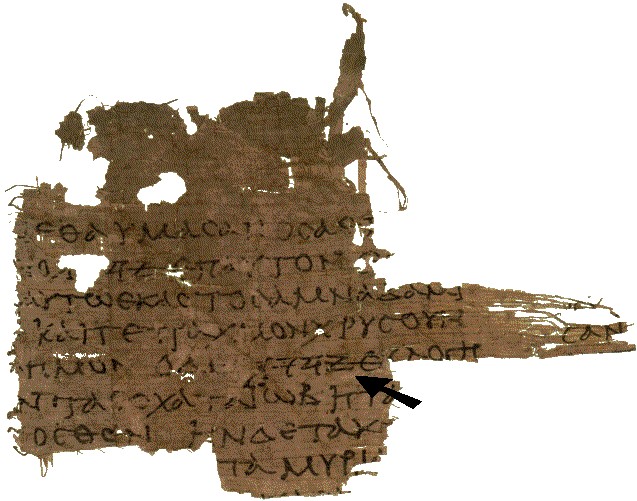
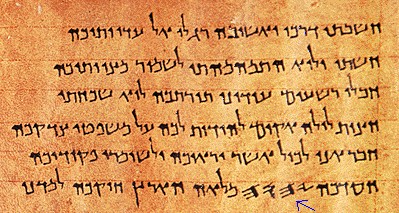
The earliest copies
of the Septuagint (LXX)
also preserved the ancient
Hebrew characters of
the Name Yahuah, as
shown in the two
photos below.
Later
copies of the
Septuagint destroyed
this Name, replacing
it with the Greek
word for
lord,
KYRIOS.
The Name is
seen clearly among
the Greek words:
Another
image of the LXX
showing the primary
Hebrew characters:
Further evidence of
the original
characters for the
Name can be seen
written on the
famous Los Lunas stone in
New Mexico, USA
(below). The
sea-level was
higher in the 9th
century BCE, so this
location in southern
New Mexico along the
Rio Grande could be
reached by large
Israelite
ships. They
left evidence of
their presence by
writing the Ten
Words (Commandments)
in ancient
Hebrew as you can
see. One
distinctive trait of
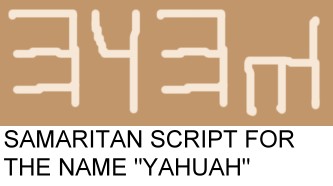
the Samaritans was
the way they wrote
the letter yod.
The Name
is located on 4th
line from bottom,
partially within
dark rectangle:
This script is often
erroneously referred
to as
"Phoenician,"
because secular
scholars mistake
the
primacy
of this letter form.
They
have taught that the
Israelites learned
this form from the
Phoenicians,
but this is not
correct.
The
"Phoenicians"
were
Israelites, Samaritans,
who traveled the
seas between the
10th to the 8th
centuries BCE.
It was the Greek
historian
Herodotus
that coined the
Greek term,
phoinikeia (Phoenicia), meaning
"date
palm."
The Greeks saw the palm-tree as the symbol of the Phoenicians
and the Israelites
minted coins with a
date palm tree on
them, possibly a way
of honoring Asherah.
The Samaritans
(northern 10 tribes
of Israel in
Samaria) had become
apostate and
worshipped the
deities of the Tyrians and
Sidonians, Baal and
Asherah. Both
Sidonians and
Israelites coined
money with date
palms, possibly
contributing to the
Greeks' referring to
them all as
phoinikeia -
Phoenicians. Rome used the word Punic for Phoenicia, and Latinized Philistia
to their word Palestine.
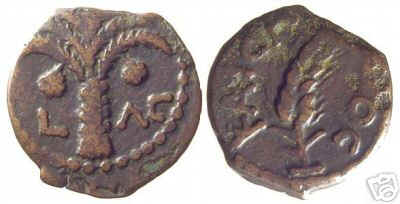
It was the Greek
historian Herodotus
that referred to the residents
of the land of
Israel
as "phoinikeia,"
and to the Greeks
this label included
both northern
(Samaritans) and
southern (Yahudah)
houses, along with
the peoples of Tyre
(Tyrians) and Sidon
(Sidonians). Ahab's
wife was a witch named
"Jezebel"
(or better Isabel). She
was a Sidonian
princess that worshipped Baal and Asherah.
Northern Israel had an alliance with the two pagan
cities of Tyre and Sidon.
The "Phoenicians" (phoinikeia)
were sea-faring
folks, and they did
not differentiate
between the
Israelites and the
inhabitants of Tyre and Sidon with their label phoinikeia.
The Israelites (of
Samaria, northern
Israel) were
smelters of metals
which they brought
back from distant
lands by ship.
The crews of these
ships were made up
of both Israelites
and the residents of Tyre and Sidon.
These Israelites had
a close business
relationship with
the Sidonians and
Tyrians, and in fact
the Israelites
became influenced by
their worship of
Baal and Asherah
through this close
contact (which
explains the date
palms on their
coins).
The
"teachings of
Isabel" (Rev.
2) is what brought
apostasy to northern
Israel -
just look at the
Baal-Asherah worship
she brought to them
in the record of Jer./YirmeYahu.
The alphabet modern scholars
refer to as
"Phoenician"
is in fact the original
Hebrew script.
By the way, these
so-called
"Phoenicians"
did not call
themselves by this
term, but were
called this by the
Greeks (like
Herodotus), and
history as we have
received it, stems
from the Greek point-of-view.
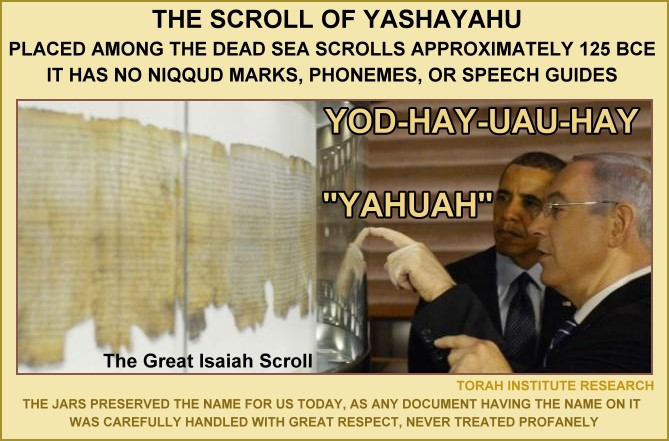
The Great Isaiah Scroll (located in the Shrine
of the Book, or Hekal Sefer)
displays the
original, primary
Hebrew lettering out
of respect for the
Name.
This
scroll was found
among the
Dead Sea Scrolls at Qumran
(1QIsaa),
125-100 BC.
The Tetragrammaton (meaning 4-lettered, referring to the Hebrew letters yod-hay-uau-hay)
was preserved by the
copyists in the
primary Hebrew,
however the rest of
the text is written
in the Aramaic characters
brought back from
Babylon, now
referred to as
"modern"
Hebrew.
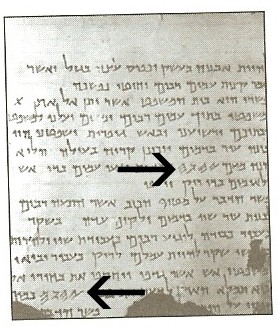
The arrows point to
the 4 letters of the
Name of Yahuah (yod-hay-uau-hay),
indicating how the
copyists of the
scroll of YashaYahu (Isaiah)
wrote it, respecting
its importance.
Today there is
an attempt to
explain the error of
the use of the new
letter "J"
which actually stems
from the Hebrew letter
"yod",
equivalent to our
English letter
"Y" but
because of the
limitations of the
Greek (no
"Y") the yod was represented
by the closest Greek
letter, "iota" our letter i.
This contributed to
distorted forms for
the Name like
"JEHOVAH," as well as "IESOUS" based
on IESU.
Along the
same line of
thought, it is
worth mentioning
that the
new letter "W"
(double-U) is a
development that
began in the 7th
century, and had not
fully come into
wider use
until the
13th century.
Even as late as the
1500's, type-sets
did not include a
"W," so
they had to use two
"V's" to
print certain
words. "Double-U"
(W) developed from
the letter
"U", which
became both
"V"
(Germany) and
"W" (about
1066 CE in England).
In short, there is
no letter
"W" in
Hebrew.
To
render the sixth
letter of the Hebrew
alef-beth as "waw"
(as I have done also
in the past)
is inaccurate.
I've begun to see
the letter as U. If
our goal is to
restore
the purity and
originality to the
Name of the One that
created the
universe, then we
need to take into
account what
alterations were
made over time and
by foreign
alphabets. So,
if we spell the
Creator's Name as
"YAHWEH,"
believing we have
overcome the
J-problem, we are
still faced with the
letter
"double-U"
problem. If
this letter didn't
exist, it needs to
revert to what it
really was
originally
- a
U.
To
dismiss the
importance of this
Name draws a bright
line of distinction
among people
today. We all
want to be as close
to correct as we
possibly can,
however we have to
embrace the reality
that not everyone
will agree with us
on every
point. As
we continue to learn
and grow in the
knowledge of Yahuah,
we also need to
remember the fruit
of having His Spirit
is love, joy, peace,
patience, kindness,
goodness,
gentleness,
faithfulness, and
self-control.
These nine fruits help us relate
to one another the
way our Father would
have us relate, to
bring honor to His
wonderful Name.
Elohim / Alahim
/ Aliya
The ending im is literally
YM (yod-mem),
sometimes making the word a plurality, or the plural ending may refer to the
importance, immensity, or power of the root word. The Hebrew root AL (alef-lamed) means “high,
go upward.” AL
(ALEF-LAMED) in the word ALIYA gives the meaning to the word, to
go upward.
Those who make aliya "go up" to Yerushalayim.
The plural ending in the word
ALAHIM may refer to either other high ones, or to the singular mightiness
of Yahuah. Since Yahuah
is ONE, this often confuses people.
The root AL is not being used as
a name, but is a pronoun describing WHAT He is. Since the term AL
means upwardness, it is really the extent of that upwardness being
emphasized by the ending when referring to Yahuah.
If we only define the word AL as mighty-one, then we can lose our
focus on what the root is referring to. The Arabic language is derived from
the ancient Hebrew tongue, and their word ALAH is a pronoun, not a name.
When they say ALAH, it is the same as a modern Christian using the generic
term GOD. It is not a name, it is a pronoun. Danial (normally Daniel)
uses the word ALAH often as he refers to Yahuah, calling Him the Most High
ALAH. We have to separate language from a set of religious beliefs.
Sabbath / Shabath
Shin-beth-tau in Hebrew means cease,
relax, or
rest.
In music, we know the symbol for rest means to
stop making sound.
The word Shabath is related to two other words,
sheba (seven), and
shabua
(week). It is the only day that was given a name of itself, and this
day was “blessed” or commended from the beginning, and set apart forever by
Yahuah Himself. It is the sign of the eternal Covenant (Ez.
20:12-20, Ex. 31:13-17). Hebrews 4:9 informs us there remains a
Sabbath-keeping for the people of Yahuah, and Mt. 24:20 instructs us to pray
that our flight not be in winter or on the Sabbath (during the Great
Tribulation).
The original word may have been SHABATH, with an SH
sound at the beginning. This was probably lost because the Greek
language has no way of sounding the “SH” at all.
Sin
The Hebrew word is kattath, and means
offense. The old English word “sin” means to “miss”, as in missing the
target in archery. If we cease to offend Yahuah, then we are living
according to His Covenant, and remain in His love.
Yahushua said, "If you abide in My Word you
are truly my talmidim, and you will know the Truth, and the Truth will set
you free." - Jn./ Yahukanon 8:31,32
His "Word" is His Torah, which
He writes
upon our hearts (thus He is the Mediator of the renewed Covenant).
Some Hebrew words have two meanings, as we see that “NATSAR” can mean
“branch,” and at the same time “watchman.”
Learn what this Hebrew Name means by clicking the banner:

TORAH INSTITUTE
119 Evergreen Road Box 436044
Middletown, KY 40253-6044
phone: 502-261-9833
Google: BYNV

It's
merely a civil commemoration of the defeat of Greek invaders against Torah
observance.
What's not to like? An invasion
/ occupation is going on even today; there's a Shiva shrine on the Temple
Mount. Back in the days of the Maccabees, it was an image of Zeus.
OUTSIDE THE USA, SAVE ON SHIPPING
BY ORDERING FROM CREATESPACE
CREATESPACE TAKES ORDERS,
PRINTS, AND SHIPS WORLDWIDE
WORLD-WIDE BOOK ORDERING:
Lew White's books at
Amazon

Grab the new book: The LIE
Now Your Real Training Begins
The Lamb Legacy Foundation is now actively accepting registrations to access its
Library. Register and look at what you've been missing in your search for Truth:
www.lamblegacyfoundation.com