Seminar Notes
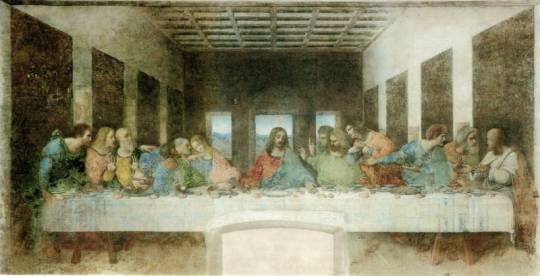
Pesach (Hebrew for "pass-over")

PASSOVER
OBSERVED AT LAST
SUPPER
'I
have eagerly desired
to
eat
this Passover with you
before
I suffer'
WHY
WE NEED REDEMPTION
FROM JUDGMENT:
SIN
1
John 3:4
“Everyone
who sins breaks the
law; in fact, sin is
lawlessness.”
Sourdough
Slim belts out a yodel
The
Covenant
(BRITH)
Ex
20:1-17
ASERETH
HA’DABARIM (10
WORDS)
Yahuah’s
Covenant, our wedding
vows:
The one whom you obey is the one you serve.
NOTE: The Catholic format of the Ten Commandments alters or changes them (Daniel 7:25).
They eliminated the 2nd Commandment, and made the 10th Commandment into two!
LITERAL
TRANSLATION:
“And
Elohim spoke all these
Words:
1.
‘I
am Yahuah
your Elohim, who
brought you out of
Egypt, out of the land
of slavery.
You
shall have no other
elohim before My face.
2. You
shall not make for
yourself an idol in
the form of anything
in heaven above or on
the Earth beneath or
in the waters below.
You shall not
bow down to them or
worship them;
for I, Yahuah
your Elohim, am a
jealous Elohim,
punishing the children
for the sin of the
fathers to the third
and fourth generation
of those who hate me,
but showing love to a
thousand [
generations] of those
who love
Me
and keep
My commandments.
3. You shall not cast
the Name of
Yahuah your
Elohim to ruin, for Yahuah
will not hold anyone guiltless who casts His Name
to ruin.
4. Remember
the Sabbath day by
keeping it qodesh.
Six
days you shall labor
and do all your work,
but the seventh
day is a Sabbath to Yahuah
your Elohim.
On
it you shall not do
any work, neither you,
nor your son or
daughter, nor your
manservant or
maidservant, nor your
animals, nor the alien
within your gates.
For in six days
Yahuah
made the heavens and
the earth, the sea,
and all that is in
them, and He rested on
the seventh day.
Therefore
Yahuah
blessed
the Sabbath day and
made it qodesh.
5. Honor
your father and your
mother, so that you
may live long in the
land Yahuah
your Elohim is giving
you.
6. You
shall not murder.
7. You
shall not adulterate.
8. You
shall not steal.
9. You
shall not give false
testimony against your
neighbor.
10. You
shall not covet your
neighbor's house. You
shall not covet your
neighbor's wife, or
his manservant or
maidservant, his ox or
donkey, or anything
that belongs to your
neighbor.”
John
3:14-15
“Just
as Mosheh lifted up
the serpent in the
desert, so the Son of
Man must be lifted up,
that everyone who
believes in Him may
have eternal life.”
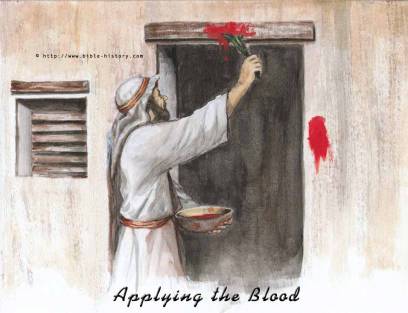
Lintel,
doorposts
- Lamb’s
blood on wood a sign
to us
1.
Passover
2.
Feast of
Unleavened Bread
3.
Shabuoth
(weeks)/Pentecost
(count 50)
4.
The Feast of
Trumpets
5.
The Day of
Atonement
6.
The Feast of
Tabernacles
7. The Great Last Day
Pesach
meaning:
“pass, skip over”
Pascha
-
Greek
transliteration
(mistranslated
as “EASTER” in KJV
at Acts 12:4)
Shaul
(Paul) told us to
“keep the
festival”, Passover:
1
Cor 5:6-8
“Get rid of the old yeast that you may be a new batch without yeast- as you really are. For (Mashiach), our Passover Lamb, has been sacrificed. Therefore let us keep the festival, not with the old yeast, the yeast of malice and wickedness, but with bread without yeast, the bread of sincerity and truth.”
ONLY
THOSE WHO ARE
CIRCUMCISED OF HEART
(IMMERSED INTO THE
NAME OF YAHUSHUA) ARE
RENEWED COVENANT
ISRAEL.
Only Israel can
OBSERVE PASSOVER. (SEE
EX./SHEMOTH CHAPTER
12). No
one else has a
covenant with Yahuah.
WITHOUT BEING
IMMERSED, ONE EATS OF
THE PASSOVER
UNWORTHILY, NOT
BEING OF ISRAEL.
NON-ISRAELITES HAVE NO
COVENANT. (SEE EPH.
2:8-13, 1COR.
11:27-30).
You
must be in a Covenant
relationship to
partake.
Passover is
about judgment not
falling upon those who
hear and obey
Yahuah’s Word (Torah
instructions).
THE
PROCESS OF DELIVERANCE
AND REDEMPTION
10th
day, lamb penned until
14th (Yahushua
rode into Yerushaliyim
on donkey on 10th
day of moon)
14th
Israelites slayed
lamb, blood on
doorposts, judgment
“passed over”
households.
14th
morning, Egyptians
afraid, gave gold,
silver, clothing (Ex.
12)
15th
Israelites depart
Egypt, redeemed from
slavery
Blood
of a substitute
A RECENT
SAMARITAN PASSOVER:

Yahuchanon/John
5:24:
“Truly, truly, I say to you, he who hears My word, and believes Him who sent Me, has eternal life, and does not come into judgment, but has passed out of death into life.”
Our
household, Israel, is
spared judgment,
passed-over.
The
judgment of Yahuah
Fell on Egypt at the
first Passover.
It
is a remembrance of
deliverance:
Ex/Shemoth
12:27
“...
You shall say,
"It is a Passover
slaughtering to (Yahuah)
who passed over the
houses of the sons of Israel
in Egypt when He smote
the Egyptians, but
spared our households."
The
lamb is selected on
the 10th
day of the first moon,
and Yahushua entered
Yerushalyim on a
donkey on this day:
BARUCH
HABA BASHEM YAHUAH
“The
people walking in
darkness have seen a
great light;
on
those living in the
land of the shadow of
death
a
light has dawned.
You
have enlarged the
nation and increased
their joy;
they
rejoice before you as
people rejoice at the
harvest,
as
men rejoice when
dividing the plunder.
For
as in the day of
Midian's defeat,
you
have shattered the
yoke that burdens
them,
the
bar across their
shoulders,
the
rod of their
oppressor.
Every warrior's
boot used in battle
and every garment
rolled in blood will
be destined for
burning, will be fuel
for the fire. For to
us a child is born, to
us a son is given, and
the government will be
on his shoulders.
And He will be
called Wonderful
Counselor, Mighty El,
Everlasting Father,
Prince of Peace.
Of the increase
of his government and
peace there will be no
end.
He will reign
on David's throne and
over his kingdom,
establishing and
upholding it with
justice and
righteousness from
that time on and
forever.
The zeal of
Yahuah Almighty will
accomplish this.”
“I
know that my Redeemer
lives,
and
that in
the end
He will stand upon the
earth.
And
after my skin has been
destroyed,
yet
in my flesh I will see
(Elohim);
I
myself will see Him
with my own eyes-
I, and not
another.
How my heart yearns within me!”
“The
way
(walk)
of
a fool seems right to
him,
but
a wise man listens to
advice.”
“There
is a way
(walk)
that
seems right to a man,
but
in the end it leads to
death.”
“The
first to present his
case seems right,
until
another comes forward
and questions him.”
ERRONEOUS
TRADITIONS . . .
“THIS
IS MY BODY”
“HOC
EST CORPUS MEUM”
(HOCUS-POCUS)
YeshaYahu/Isaiah
53
THE PASSOVER
LAMB
“Who
has believed our
message and to whom
has the arm of Yahuah
been revealed?
He grew up
before him like a
tender shoot, and like
a root out of dry
ground.
He had no
beauty or majesty to
attract us to Him,
nothing in His
appearance that we
should desire Him.
He was despised
and rejected by men, a
man of sorrows, and
familiar with
suffering.
Like one from
whom men hide their
faces He was despised,
and we esteemed Him
not.
Surely
He took up our
infirmities and
carried our sorrows,
yet we considered Him
stricken by Elohim,
smitten by Him, and
afflicted.
But
He was pierced
for our
transgressions, He was
bruised
for our iniquities;
the punishment that
brought us peace was
upon Him, and by His
wounds we are healed.
We all, like
sheep, have gone
astray, each of us has
turned to his own way;
and Yahuah has laid on
him the iniquity of us
all.
He
was oppressed and
afflicted, yet He did
not open his mouth; he
was led like a
lamb to
the slaughter, and as
a sheep before her
shearers is silent, so
He did not open his
mouth. By
oppression and
judgment He was taken
away.
And who can
speak of his
descendants?
For He was cut
off from the land of
the living; for the
transgression of My
people He was
stricken.
He was assigned
a grave with the
wicked, and with the
rich in His death,
though He had done no
violence, nor was any
deceit in His mouth.
Yet
it was Yahuah will to
bruise Him and cause
Him to suffer, and
though Yahuah makes
His life a guilt
offering, He will see
His offspring and
prolong His days, and
the will of Yahuah
will prosper in His
hand.
After the
suffering of His
being, He will see the
light [of life] and be
satisfied; by His
knowledge my righteous
Servant will justify
many, and He will bear
their iniquities.
Therefore I
will give Him a
portion among the
great, and He will
divide the spoils with
the strong, because He
poured out His life
unto death, and was
numbered with the
transgressors.
For He bore the
sin of many, and made
intercession for the
transgressors.”
Ps
22:31
The Lamb on the
stake
My
El, my El, (ELOI,
ELOI) why
have you forsaken me?
Why are You so far
from helping me, and
from the words of my
roaring?
O
my El, I cry in the
daytime, but you hear
not; and in the night
season, and am not
silent.
But
you are qodesh,
You
that inhabits the
praises of Israel.
Our
fathers trusted in
you: they trusted, and
you delivered them.
They
cried to you, and were
delivered: they
trusted in you, and
were not confounded.
But
I am a worm, and no
man; a reproach of
men, and despised of
the people.
All
they that see me laugh
me to scorn: they
shoot out the lip,
they shake the head
saying,
He
trusted on Yahuah that
he would deliver him:
let him deliver him,
seeing he delighted in
him.
[Matt
27:42-43:
“He saved
others; Himself he
cannot save.
If he be the
King of Israel, let
Him now come down from
the (stauros), and we
will believe Him.
He trusted in
Elohim; let him
deliver him now, if He
will have him: for He
said, I am the Son of
God”]
But
you are He that took
me out of the womb:
you made me hope when
I was upon my mother's
breasts.
I
was cast upon You from
the womb:
You are my
Elohim from my
mother's belly.
Be
not far from me; for
trouble is near; for
there is none to help.
Many
bulls have surrounded
me: strong bulls of
Bashan have beset me
round.
They
gaped upon me with
their mouths, as a
ravening and a roaring
lion.
I
am poured out like
water, and all my
bones are out of
joint: my heart is
like wax; it is melted
in the midst of my
bowels.
My
strength is dried up
like a potsherd; and
my tongue cleaves to
my jaws; and You hast
brought me into the
dust of death.
For
dogs have compassed
me: the assembly of
the wicked have
enclosed me:
they pierced my hands
and my feet.
I
may tell all my bones:
they look and stare
upon me.
They
part my garments among
them, and cast lots
upon my vesture.
But
be not far from me,
Yahuah: O my strength,
haste to help me.
Deliver
my being from the
sword; my darling from
the power of the dog.
Save
me from the lion's
mouth: for thou hast
heard me from the
horns of the unicorns.
I
will declare Your Name
to my brethren: in the
midst of the
congregation will I
praise You.
You
that fear Yahuah,
praise him; all ye the
seed of Jacob, esteem
Him; and fear Him, all
you the seed of
Israel.
For
he has not despised
nor abhorred the
affliction of the
afflicted; neither has
He hid His face from
Him; but when He cried
unto Him, He heard.
My
praise shall be of You
in the great
congregation: I will
pay my vows before
them that fear Him.
The
meek shall eat and be
satisfied: they shall
praise Yahuah that
seek him: your heart
shall live for ever.
All
the ends of the world
shall remember and
turn to Yahuah: and
all the kindreds of
the nations shall
worship before You.
For
the kingdom is
Yahuah’s: and He is
the governor among the
nations.
All
they that be fat upon
Earth shall eat and
worship: all they that
go down to the dust
shall bow before him:
and none can keep
alive his own soul.
A
seed shall serve him;
it shall be accounted
to Yahuah for a
generation.
They
shall come, and shall
declare his
righteousness to a
people that shall be
born, that he has done
this.”
What
is to be declared to
the generations?
PASSOVER
WHAT
IS
PASSOVER?
What
does this mean?
"In days to come, when your son asks you , 'What does this mean?' say to him, 'With a mighty hand (Yahuah) brought us out of Egypt, out of the land of slavery. When Pharaoh stubbornly refused to let us go, (Yahuah) killed every firstborn in Egypt, both man and animal. This is why I sacrifice to (Yahuah) the first male offspring of every womb and redeem each of my firstborn sons.' And it will be like a sign on your hand and a symbol on your forehead that (Yahuah) brought us out of Egypt with his mighty hand."
The
Hebrew word is Pesach.
Passover is
a “shadow” of
coming things, and is
an observance that
involves the
understanding of
blood-covering, the
significance of the
firstborn, judgment,
and the marriage feast
of the Bride.
It is a
remembrance for all
generations that YHWH
brought out the
children of Israel
from the bondage of
slavery (sin).
Scripture
clearly identifies the
Bride as Israel,
Yahuah’s Wife.
All 12
tribes—12,000 from
each—become the
first-fruits at the
harvest of the Earth
(Rev. 14:4). The
Passover in Mitsrayim
was the culmination of
the 10 plagues, and
will relate to the
fall of Babylon when final
judgment
falls as described in
the book of
Revelation.
Pharaoh
represents ha shatan,
who will not allow
YHWH’s people to be
free from the bondage
of sin.
Judgment,
or Redemption?
For
3500 years faithful
servants of Yahuah
have remembered this
night.
On this day 2000 years
ago another lamb was
slain.
On this day 2000 years
ago human hearts were
stroked with lamb’s
blood
On this day 2000 years
ago hearts were freed
from centuries of
slavery.
On this day 2000 years
ago Yahuah began to
look for Lamb’s
blood on doorposts of
hearts.
On this day 2000 years
ago there was
deliverance—a
passing over (of
judgment).
On this day 2000 years
ago wealth was
restored to the sons
of Adam.
On this day 2000 years
ago another Mosheh led
Israel out of another
Egypt.
On this day 2000 years
ago Lamb’s blood on
the doorposts of
hearts brought
freedom.
Today Lamb's blood is
still found on human
hearts.
Today deliverance is
found behind a blood
stained door.
If the doorpost of
your heart is stained
with Lamb’s blood,
have an edifying
Passover season.
If not, grab quickly
the hyssop and look
for the Lamb’s
blood.
The exodus will come
suddenly.
THE
FIRSTBORN
After
the Great Flood,
Nimrod set up the
Kingdom of Babylon.
It was in
opposition to YHWH,
and ESTABLISHED THE
WORSHIP OF THE OBJECTS
(CREATION) IN THE
SKIES.
Directed by the
rebellious watcher ha
shatan, Nimrod misled
the descendants of
Yaphath and Ham to
establish customs
involving the worship
of the sun, moon,
planets, and stars.
This was the
inception of Paganism,
and it was carried all
over the Earth.
In Egypt, or
Mitsrayim, King Menes
became that nations’
counterpart of Nimrod.
The firstborn
son of each ruler
became the next son of
“RA”, which they
called their mighty
one, the sun.
The solar disc,
the sun-ray obelisk,
and the EAGLE-winged
sun disc were emblems
for RA.
These same
symbols originated
from Babylon, moved
through Media-Persia,
on through Mitsrayim,
and into Greece and
Rome later on.
Mitsrayim had
other mighty ones, but
RA was the chief.
THE
LIFE IS IN THE BLOOD
Without the
shedding of blood,
there is no remission
of sin. (Heb.
9:22)
Adam
and Chuwah were
created as eternal
creatures,
“covered” by the
Chabod of YHWH—He
dwelt with them
literally.
Never was there
a separation, until
“disobedience”
occurred.
Love produces
obedience, and hatred
produces disobedience.
The hatred had
it’s source in ha
shatan, who
“infected” Chuwah,
spreading it like
YEAST to her husband,
Adam.
Love is the
unselfish helping of
others, and emanates
from YHWH.
Being cut off
from YHWH and without
this love, His
creation languishes in
hatred and
selfishness.
Upon the
removal of YHWH’s
Chabod and having
taken upon themselves
the choices of what is
good and evil, Adam
and Chuwah realized
their nakedness and
withdrew further from
YHWH—hiding from
Him.
They began to
die.
YHWH
“covered” their
now-dying bodies with
bloody lamb skins.
This was
a “type” for the
first Passover.
Without the
shedding of blood,
there is no
covering
for sin.
The life is in
the blood.
The
blood of clean animals
was provided as a
covering for sin on
the altar. One side of
the Arc’s mercy seat
was sprinkled as a
future picture of our
Passover Lamb’s
offering of His life.
WHEN
IS PASSOVER?
According
to Leviticus 23, Deut.
16, Exodus 12, we are
to watch for the new
moon in the spring,
count up to the
fourteenth day, and
observe the Passover.
The fourteenth arrives
at evening, the
beginning of the day.
Twilight is the
period just after
sunset, and lasts a
little under thirty
minutes.
This
“evening” is the
twilight; “And
there was evening and
there was morning the
first day.”
So,
days begin at evening
when the sun sets.
The reason we
can be sure of this is
the example given at
NehemYah 13:19:
“And it came
to be at the gates of
Yerushaliyim, as it
began to be dark
before the Sabbath,
that I commanded the
gates to be shut, and
commanded that they
should not be opened
till after the
Sabbath.”
YHWH
says to observe the
Passover on the
fourteenth day at
evening.
THE
NEW MOON
The
determination of when
a new moon occurs has
been in dispute over a
range of one or two
days.
But it’s not
days we are concerned
with—it is the moon.
Any physicist,
meteorologist or any
technically trained
person can tell you
that a new moon is a
black ball, as you
will see on your
calendar.
This is the
determination that is
currently used by the
Yahudim.
The
renewed moon can be
seen a day or two
after the moon passes
directly between the
sun and the earth.
People have
begun to look for the
new moon after sunset
and they have called
what they see (which
is a crescent moon)
the new moon.
This procedure
cannot be found from
Scripture. The
knowledge of when the
new moon arrives is
determined by simply
counting:
1 Shemuel 20:5
“And Dawid
said to Yochanon,
‘see tomorrow is the
new moon, and I ought
to sit with the
sovereign to eat.
But let me go
and I shall hide in
the field until the
third day
evening.’”
1
Shemuel 20:18:
“So Yochanon
said to him,' tomorrow
is the new moon and
you shall be missed
because your seat
shall be empty.’”
Nowhere
in Scripture is there
an example of anyone
waiting to see the new
moon.
When the
“crescent” moon is
first visible, it is
actually the 2nd day
of the renewed moon. The
crescent moon was used
by the ancient world,
but it was not Israel
who used it;
the worshippers
of Diana (Artemis,
Ishtar, Venus, Asherah,
etc.,.) used it as her
symbol, as do the
Ishmaelites (and
Islam) today.
The Yahudim
have traditionally
called the entire
period of Passover and
Unleavened Bread by
the term
“Passover.” (Luke
22:1).
On
the fifteenth at the
beginning of the day
(which is at evening)
is the first day of
the Feast of
Unleavened Bread.
No laborious
work is to be done
except for preparing
meals.
What has
happened is, Passover
was joined together
with this first day of
Unleavened Bread so
when people sit down
today for a Passover
Seder, it’s really
the fifteenth.
We
perceive that the
Yahudim are correct in
their determining the
new moon and we
believe that Yahushua,
our Passover Lamb, was
sacrificed on the
fourteenth.
We believe that
Yahushua’s last meal
with His talmidim was
what would be called
the Passover Seder.
He said, “with
desire I have desired
to eat this Passover
with you before My
suffering, for I say
to you I shall
certainly not eat of
it again until it is
fulfilled in the reign
of Elohim.”
Luke
22:15 & 16
So
at the beginning of
the fourteenth we
remember Yahushua’s
death which was on the
fourteenth.
The focus of
the death of the lambs
point to Yahushua.
What day was
Yahushua sacrificed?
On the
fourteenth.
The first day
of Matsah was (and is)
the High Sabbath of
the fifteenth, which
is why there was an
urgency to remove the
bodies before the sun
set.
Since the
requirement for the
death of the Passover
Lamb was to be between
the beginning and
ending of the evening,
YHWH brought darkness
over the entire land
in the middle of the
day.
HOW
TO
OBSERVE PASSOVER
Yahushua
is the Passover Lamb,
so there is no need to
have a physical lamb;
but it is not
necessarily wrong to
do so.
His body (the
Lamb’s body), by His
own words, is
represented by the
Matsah.
The cup of the
fruit of the vine
represents the new
covenant in His blood
offered for the
remission of sin.
“Without
the shedding of blood
there is no remission
of sin.”
It
is still important for
us today to remember
how diligent Yahushua
was in keeping His
talmidim vigilant the
night which followed
the Passover Seder,
because this was
stipulated to be a
night of vigilance by
the Torah.
Corresponding
to the time of the
slaying of the first
born in ha shatan’s
dominion, Yahushua was
captured in the garden
and His death began.
Exodus 12:30:
“And there
was a great cry in
Mitsrayim, for there
was not a house where
there was not a dead
one.”
Exodus
13 :8,9:
“And you
shall inform your son
in that day, saying
‘it is because of
what YHWH did for me
when I came up from
Mitsrayim.’ And
it shall be as sign to
you on your hand and
as a reminder between
your eyes, that the
Torah of YHWH is to be
in your mouth, for
with a strong hand,
YHWH has brought you
out of Mitsrayim.”
Exodus
12:42:
“It is a
night to be observed
unto YHWH for bringing
them out of the land
of Mitsrayim.
This night is
unto YHWH, to be
observed by all the
children of Yisrael
throughout their
generations.”
The
word “observed” is
the Hebrew word shimmur
and it means a vigil
or a watch.
Passover is not
a Sabbath but a night
of vigilance.
This is why
Yahushua was trying to
keep His talmidim
awake, and also why
everyone was awake in
the city, standing
around fires for
warmth.
It could be
that Yahushua wants us
to watch, because like
the slaying of the
first born in
Mitsrayim, He will use
this same night some
year to take the weeds
out of the earth.
This is the
opposite of what the
rapture cult has
taught us.
As
we observe the seven
days of Matsah that
follow, we remember
that we left the
bondage of sin behind.
The unleavened
bread represents our
life with Yahushua
without sin, and the
haste of our
deliverance.
The
first day of
Unleavened Bread was
the day Israel came
out of Mitsrayim; the
seventh day of
Unleavened Bread was
the crossing of the
Sea of Reeds and the
death of the army of
Mitsrayim. The first
and seventh days of
Matsah are high
Sabbaths.
We are
commanded to eat
unleavened bread those
seven days, and have
no leavened bread at
all.
This relates to
our abandoning sin,
and separation from
the unclean and
idolatrous secular
realm, which will
receive the judgment
of YHWH.
WHERE
DO WE OBSERVE
PASSOVER?
Deut.
16:5:
“You
are not allowed to
slaughter the Passover
within any of your
gates (cities) which
YHWH your Elohim gives
you, but at the place
where YHWH your Elohim
chooses to make His
Name dwell, there you
slaughter the Passover
in the evening at the
going down of the sun,
at the appointed time
you were taken out of
Mitsrayim.”
Where
do we observe
Passover?
Like the first
one, we observe it in
our homes.
YHWH’s Name
dwells in His living
Temple, and we are the
living stones of His
Temple, made without
hands.
We do not
slaughter a lamb,
because the Lamb has
been slain, once
for all.
SHADOW
OF COMING THINGS
Passover
points to our
deliverance from sin,
and to the marriage
feast of the Lamb
(Rev. 19:7-9) — we
are YHWH’s wife
(bride), since we are
part of the engrafted
(or even natural
branches) of Israel
(Romans 11).
The judgment of
the world will
correspond to the 10
plagues of Mitsrayim.
The 10th
plague, Passover,
represented the
judgment of ha shatan,
who was represented by
Pharaoh (known as the
“son of the sun”),
and his dominion.
Pharaoh was
considered the “son
of RA”, which was
depicted as an eagle,
a sundisc with eagle
wings, a snake (like
Marduk), or an obelisk
(sun ray).
The judgment
was the killing of the
firstborn, and all 10
plagues were judgments
against Mitsrayim’s
principal idols.
The final
plague, the death of
the firstborn, showed
the world the weakness
of RA (shatan);
the firstborn
was to become the next
Pharaoh.
The Pharaoh’s
(or RA’s) emblem was
the eagle, which he
wore on his chest, and
has been used by
shatan throughout his
movements on the earth
over all of history.
The Washington
Monument is the
largest obelisk to
ever exist, and it
resides in shatan’s
center of power today.
It is on “lot
666”, and is exactly
6,660 inches high —
thanks to the Masonic
/ Illuminati planners
who govern the US.
The eagle is
the national bird, as
it was for Germany,
the “Holy” Roman
Empire, the Roman
Empire, Zeus of
Greece, RA of Egypt,
Ahura Mazda of Persia,
and Baal of Babylon.
The
firstborn Pagan
lineage was snapped
off, and became
impotent;
Mitsrayim NEVER
RECOVERED.
Sin is slavery,
and is the mind of the
flesh, and was
overcome by
Yahushua’s death.
THE
MERCY SEAT
The
Ark of the Covenant
(container of the
Torah, the marriage
covenant) was called
“YHWH”, and the
two cherubim on the
lid are both Israel
— only one side
received the sprinkled
blood, and this
represented Yahudah
(the Southern Kingdom,
made up of Yahudah,
Benyamin, and Lewi). These
tribes are the
“firstborn”, or
the “older
brother” in the
parable of the
prodigal son.
The 10 lost
tribes (the 10
virgins) are the other
cherub on the mercy
seat, who became
“lost” and lived
like Pagans,
worshipping in
harlotry (idolatry),
but eventually return.
Yahushua said, “I
was sent only for the
lost sheep of the
House of Israel.”
The
older brother, Yahudah,
will become jealous to
see the younger
“lost” brother
return to YHWH, and
Yahushua’s blood has
been sprinkled on the
other side of the
Mercy Seat now.
Scripture calls
the lost tribes
“Ephraim” (Ezek.
37).
The
10 virgins represent
the 10 lost tribes.
The 5 wise
virgins have plenty of
oil in their lamps
because they searched
the Scriptures for
themselves, and knew
the Name and the
Torah.
The 5 unwise
virgins only took the
traditions of men into
account, and listened
to what the paid
“merchants”
taught.
They were told
to go “buy” oil
from the merchants,
but by the time the
Bridegroom arrived,
they were unprepared
to enter the marriage
feast.
YermeYahu
16:19b:
“Our
fathers have inherited
only falsehood,
futility, and there is
no value in them.”
THE
REGATHERING
YHWH
says at YermeYahu
16:14-17:
“’Therefore
see, the days are
coming,’ declares
YHWH, ’when it is no
longer said, ’YHWH
lives who brought up
the children of Israel
from the land of
Mitsrayim’, but,
’YHWH lives who
brought up the
children of Israel
from the land of the
north and from all the
lands where He had
driven them’.
For I shall
bring them back into
their land I gave to
their fathers.
See, I am
sending for many
fishermen,’ declares
YHWH, ’and they
shall fish for them.
And after that,
I shall send for many
hunters, and they
shall hunt them from
every mountain and
every hill, and out of
the holes of the
rocks.
For My eyes are
on all their ways;
they have not hidden
from My face, nor has
their crookedness been
hidden from My
eyes.”
(See
also Ezek. 37, Rev.
19:7-9).
This year we
will observe the
remembrance of
Yahushua's death 24
hours before the onset
of the High Sabbath of
Matsah, as we usually
do - Yahushua did this
also, as we will soon
see. Since the moon is
used to determine when
our feast days (moedim,
appointments) occur,
we know
that the 15th of the
moon is the first High
Sabbath; and the moon
should be
"full", for
which Scriptural
evidence is quoted
below. At first, this
will make little sense
if one uses a
"crescent moon
sighting" to
determine the
beginning of the moon.
But the
"full" moon
is very apparent when
it arrives. This year,
we will expect the
full moon to arrive at
sunset on April 13th,
so from that sunset to
the following sunset,
we will rest from work
and keep leaven from
our dwelling for 7
days. This means that
the passover meal
we'll have will occur
at evening when the
14th of the moon
arrives, not when the
14th of the moon ends
(that would make it
the 15th). So, at
sunset on April 11th,
we will have matsah
bread, wine, and we'll
shish-ka-bob some lamb
meat with some
veggies.
We
understand that
Yahushua observed
Passover at the
beginning of the 14th
at evening (twilight)
based on
what
is found in His own
words - the High
Sabbath was not until
the following sunset,
after He died.
The
major confusion stems
from the use of the
word
"Passover"
as
it is used then and
now to refer to the
whole period of time
surrounding the feast
of Matsah:
"Now the
first day of the feast
of unleavened bread
the disciples came to
(Yahushua), saying
unto him, 'Where wilt
thou that we prepare
for thee to eat the
passover?'"
"Eat
the Passover" would
be specifically
observing the Passover
meal, and not be the
whole period of Matsah.
But, the first part of
this sentence cannot
mean what it says; if
the 1st day of Matsah
had come, they'd have
missed Passover. What
is meant is that the
1st day of Matsah was
"approaching"
soon, not that it had
arrived. The text
continues:
"And he
said, 'Go into the
city to such a man,
and say unto him, The
Master saith, My time
is at hand; I will
keep the passover at
thy house with my
disciples'".
This
was in answer to the
specific question
about
"WHERE" He
would have them
prepare for Him to
"eat the
Passover".
"And the
disciples did as (Yahushua)
had appointed them;
and they made ready
the Passover. Now when
the even was come, He
sat down with the
twelve."
Matt
26:17-20.
Yahushua
makes specific remarks
to eating the
Passover, and it is
even in reference to
being BEFORE He
suffers:
"He
replied, 'As you enter
the city, a man
carrying a jar of
water will meet you.
Follow him to the
house that he enters,
and say to the owner
of the house, 'The
Teacher (Rab)
asks: 'Where is the
guest room, where I
may eat the Passover
with my disciples?' He
will show you a large
upper room, all
furnished. Make
preparations there.'
They left and
found things just as (Yahushua)
had told them. So they
prepared the Passover.
When the hour came,
Yahushua and his
apostles reclined at
the table. And He said
to them, 'I have
eagerly desired to
eat
this Passover with you
before I suffer.
For I tell you,
I will not eat it
again
until
it finds fulfillment
in the kingdom of (Elohim).'"
Luke
22:10-16.
You'll
notice Pilate
referring to the whole
period of time as
"Passover".
The Yahudim combined
the observance of
Passover with the 1st
day of Matsah, so we
see the texts showing
they wanted the bodies
taken down from the
stakes before the High
Sabbath arriving at
sunset, the beginning
of the 15th day of the
moon, yet they
wouldn't enter the
chambers because they
didn't want to defile
themselves so they
might be able to
"eat the
Passover".
Yahushua had done that
already the previous
evening as He stated,
'I
have eagerly desired
to
eat
this Passover with you
before I suffer'
As we each
study and observe
everything to the best
of our understanding
of Yahushua's example,
we can arrive at
different conclusions.
We want unity too, but
we accept others
regardless of their
differences in
understanding. It's
just difficult to
observe Passover on
the 14th when it's the
beginning of the 15th.
There are even
differences in how
people reckon the
arrival of the New
Moons, adding to the
counting differences.
We follow the dark
moon, and when the
sliver moon appears at
sunset the following
day, we know it's the
END of the 1st day of
the moon, not the
beginning of the first
day; that way, when
our count to the 15th
arrives, the moon will
be completely full
every time.
”Blow
the shofar in the new
moon, and in the full
moon, the day of our
feast."
Ps 81:3 (Referring of
course to the Sabbaths
of the 7th moon, when
we blow the shofar on
the new moon day.
The important thing to
notice is the FULL
MOON, the "day
of our feast",
which arrives on the
15th - Sukkoth or
Tabernacles).
Probably
99% of we Natsarim
Israelites observe
Pesach at the END of
the 14th, and of those
there are two views
over how to start the
moon count; so there
is much division in
the interpretation.
All I've been trying
to point out is that
the FULL moon is the
day of our feast (as
we see Scripture tells
us), and that Yahushua
observed Pesach with
His talmidim 24 hours
ahead of the arrival
of the 1st day of
Matsah, which meant
that He observed
Pesach as soon as the
14th of the moon
arrived. Had He waited
until the END of the
14th to eat the
Passover with His
talmidim, He would
have been in the tomb
doing it. We see that
the 14th is a night if
vigilance, and much of
the
city was awake
when Yahushua was
arrested. The fact is,
observances varied
among the different
groups back then, just
as there are
variations today. If
we analyze how
Yahushua showed us to
do it by His own
example, we'll be a
bit odd to the
majority, but that's
fine. He said,
"Do this in
remembrance of
Me." So we do
"it"
(Passover), and
remember His death all
day on the
14th of the first
moon, beginning with
the arrival
of the 14th, not
waiting until the 14th
is over.
SHABUOTH
(for
Roman year 2006)
Shabuoth is Hebrew for
"weeks",
since "shabua"
means
"week":
We
differ somewhat from
the orthodox Yahudim
on the observance of
Shabuoth, because Lev.
23 clearly states it
is always on Yom
Rishon, the first day
of the week. They
begin their count of
the 50 days from a
different
"Sabbath";
instead of the weekly
Sabbath, they use the
movable High Sabbath,
and count off
"groups" of
seven days, ending up
with a day that rarely
turns out to be the
"morrow after the
seventh Sabbath".
We
understand the
differences and
nuances, but weighing
all the evidence there
is only one way it
will work out
correctly. We will be
recognizing Shabuoth
on
Roman date June 4,
2006, actually
beginning the previous
sunset.
For
those who may need
some direction on
observing Passover
Many
people are beginning
to learn about
Passover in their
Christian assemblies,
and this is a very
good trend to be
seeing.
The Torah
(Torah:
"instruction",
or Command,
Declaration, Teaching,
Direction) directs us
to observe the
Passover (Hebrew,
Pesach), being the
remembrance of
Yahushua's death. It
is properly done in
the family home, and
we re-tell the account
of Israel
being brought forth
from the land of
Mitsrayim by the
mighty hand of Yahuah.
By
observing Pesach, our
children learn of the
literal history of
their faith and walk,
as well as the redemption
plan set forth
by Yahuah.
Since
Christians are
believers in Yahushua,
they need to realize
they are engrafted
into Israel,
and therefore must
worship (obey) the
same instructions as
given - and not repel
the instructions
(Hebrew, Torot) as
many have been taught
to do for many
generations.
Through the
Covenant (Torah,
10 Words), we are
counted as Israel, the
people of Yahuah.
As Israelites,
we are also priests to
the nations, to teach
them to obey the Torah
of Yahuah.
What we do to
observe Passover
Our family has a special meal with shish-ka-bob lamb meat, matsah crackers, parsley, and horseradish included. We read Shemoth / Exodus (ideally chapters 5 through 16), which is all the "haggadah" anyone should ever need. The minimum texts a family should read would be chapters 12 and 13. Then, we read the account of Mt. 26 & 27, which describes the Pesach observance of
Yahushua
with His talmidim. It
also provides the
account of His arrest
and death - which
Pesach points to,
since Yahushua is the
Lamb of Yahuah.
The order
(seder) traditionally
observed by the
Yahudim is fine also,
however they miss the
Mashiach in theirs. To
perform the
traditional haggadah
takes hours and hours.
Here is one site where
you can download a .pdf
of one:
www.ccarnet.org/Haggadah
We
prefer to stick to
Torah and the
Messianic approach,
without the
"leavening"
of the Pharisees
(Orthodox Judaism).
Human traditions have
crept into most
Messianic groups.
Since Pesach is a
night of
"watching",
we try to stay up very
late.
Mashiach
and His talmidim went
out to the garden that
same night, where He
was arrested, and He
was trying to keep
them from falling
asleep. In fact, there
were fires all over
Yerushalyim that
night, where people
were up watching --
and Kepha warmed
himself at one of
these.
We differ from
many in that we
observe Pesach at the beginning
of the 14th, rather
than the end.
The 15th is the
first day of Matsah,
so if you wait until
twilight at the
beginning of the 15th,
the 14th is over, and
you will have missed
Pesach.
Don't follow
this without testing
it with Scripture at
Lev./Wayyiqra 23 &
Dt./Debarim 16. The
beginning of the 14th
day of the first moon
this year will arrive
at sunset, april 11th
(Roman date). The
following
evening/sunset, will
be the high Sabbath of
the first day of
Matsah, Unleavened
Bread, the beginning
of the 15th day of the
moon, and the moon
will be full - as it
was when Yahuah led
the children of Israel
out of the land of
Mitsrayim.
NEW
MOON CALCULATION
There
will always be
differences in
interpretations, but
love overcomes these.
Some
"sight" a
new moon sliver at
sunset, others know
the dark moon is the
actual
new
moon. The day before
a new moon, a
"sliver
moon" (old moon)
appears just before SUNRISE.
Then,
there's approximately one
day without a moon to
see at all. When a
sliver moon appears at
SUNSET, that simply
means that the first
day of the moon just ended.
The best test of when
we should be beginning
our count is when the 15th
of the moon arrives
(on the 15th, the moon
should always be
full).
Blow
the shofar in the new
moon, and in the full
moon, the day of our
feast."
Ps 81:3
(Referring of course
to the Sabbaths of the
7th moon, when we blow
the shofar on the new
moon day.
The important thing to
notice is the FULL
MOON, the "day
of our feast",
which arrives on the
15th - Sukkoth or
Tabernacles).
It's
not what the MOON is
doing, but how we
INTERPRET what it is
doing that determines
things.
If
the moon is FULL on
the 15th of our count,
then we started with
the dark moon. If the
full moon arrives on
the 14th of our
count, it is
because we started
our count with a
sliver moon. If
the moon is FULL and
we've only counted to
14, the following day
the moon will be missing
the same amount of
light we started our
moon with.
The
only new moon day that
is a Shabbath of rest
is the first day of
the seventh moon.
The
reason you're seeing
so many differences in
Messianic Natsarim
observance is because
people
have allowed
themselves to be
infiltrated with
teachings from misled
individuals, or even
anti-missionary
groups such as the
Karaites.
Those who don't
believe in Yahushua as
the Mashiach must not
be any sort of source
for our doctrine, but
as time passes the Karaites
and the Talmud
are
being quoted by more
Messianic teachers all
the time. Without the
indwelling of the
Teacher, we can be
tossed back and forth
by any wind of
doctrine. Much may be
correct, but there are
even differences in
observance between the
Orthodox Yahudim and
the Karaites.
No
"moon
sighting" is
mentioned in the Torah
as we see being done
today by many.
“Then Jonathan said to David: 'Tomorrow is the New Moon festival. You will be
missed,
because your seat will
be empty.'"
1 Sam 20:18.
"Jonathan"
knew in advance that
the new moon was
coming, since the
"old moon"
crescent before
SUNRISE is a sure
indication that the
moon is one day away.
The NEW MOON FESTIVAL
he referred to must
have been the 1st day
of the 7th moon, which
is a commanded feast
called Yom Teruah, or
the day of blowing the
shofar. Some teach
that EVERY new moon is
a commanded
convocation, even
without a scrap of
Torah to quote. Always
ask them to produce a
solid Scripture, not a
"sound bite"
that over-reaches what
the text is really
saying.
For the most
part, we find that
Scripture agrees with
most of the Orthodox
views in the weekly
Shabbath, and the 7
High Shabbaths, except
for the count to
Shabuoth - the
Karaites actually keep
that correctly.
Neither of these
groups have belief in
Mashiach Yahushua; but
if we have the
Scriptures, the
discernment of
Yahushua, and the
moon, we can
eventually find the
correct pattern. Most
importantly, we are
well advised to be at
peace with others in
spite of subtle
differences. I'm not
saying to compromise
what we believe, but
rather accept that
others are searching
for the Truth as well.
Impatience,
unkindness, and
intolerance will
interfere with the
work of Yahushua.
People change as they
better understand
Torah. There is still
quite a bit that
people do that is not
found in Torah, and
one of those is the
"sighting"
of a new moon.
The
only new moon that we
are told is a day of
rest from regular work
is the 1st day of the
7th moon.
QUESTIONS
RECENTLY POSED:
I
realized through our
communication there
are very few people
keeping the feast the
way we do.
Most are
crescent keepers, and
don't even want to
hear what we have to
say.
Q:
Do
you think these are
salvation issues?
Lew's
response:
No,
our salvation is
infinitely sure, and
certainly covers
unintentional errors
in our understanding.
No one is
intentionally
rebelling against what
Scripture says if they
have given their lives
to the pursuit of the
Truth, and wish to
serve Yahushua. We are
not all on the same
level of
understanding, even
those who may have
closed their eyes to
listening are not
rebelling
intentionally.
The
Sabbaths, new moons,
and other instructions
are
"shadows",
and one day we will
see the reality of
what is casting those
shadows.
Another
question is from 1 Cor
11:27:
“Therefore
whoever eats the bread
or drinks the cup of
Yahshua in an unworthy
manner, shall be
guilty of the body and
the blood of Yahshua.”
Q: What's
your understanding on
this verse?
Lew's
response:
The
simple answer would be
that anyone who is not
Israel cannot and
should not partake of
the Passover
observance. Our
circumcised male
children (circumcised
at birth) who have
been trained in the
Covenant and observe
Torah would certainly
be Israel. We as adult
males, or females,
coming from outside
the Covenant with
Israel must be
immersed into the Name
of Yahushua before
partaking. As Natsarim,
we are a very special
remnant group within
Israel. Eph. 2:8-13
and 1Cor. 11:27-30
directly relate to
these considerations.
For those who
may need some
direction on observing
Passover
Many
people are beginning
to learn about
Passover in their
Christian assemblies, and
this is a very good
trend to be seeing.
The Torah
(Torah:
"instruction",
or Command,
Declaration, Teaching,
Direction) directs
us to observe the
Passover (Hebrew,
Pesach), being the
remembrance of
Yahushua's death.
It is properly
done in the
family home, and we
re-tell the account of
Israel
being brought forth
from the land of
Mitsrayim by the
mighty hand of Yahuah.
By observing
Pesach, our children
learn of the literal
history of their faith
and walk, as well as
the redemption
plan set forth
by Yahuah.
Since Christians
are believers in
Yahushua, they need to
realize they are engrafted
into Israel,
and therefore must
worship (obey) the
same instructions as
given - and not repel the
instructions (Hebrew,
Torot) as many
have been taught to do
for many generations.
Through the
Covenant (Torah, 10
Words), we are counted
as Israel, the people
of Yahuah.
As Israelites, we
are also priests to
the nations, to teach
them to obey the Torah
of Yahuah.
What we do to
observe Passover
Our family has
a special meal with
shish-ka-bob lamb
meat, matsah crackers,
parsley, and
horseradish included.
We read Shemoth /
Exodus (ideally
chapters 5 through
16), which is all the
"haggadah"
anyone should ever
need.
The minimum
texts a family should
read would be chapters
12 and 13.
Then,
we read the account of
Mt. 26 & 27, which
describes the Pesach
observance of Yahushua
with His talmidim.
It also
provides the account
of His arrest and
death - which Pesach
points to, since
Yahushua is the Lamb
of Yahuah.
The
order (seder)
traditionally observed
by the Yahudim is fine
also, however they
miss the Mashiach in
theirs.
To perform the
traditional haggadah
takes hours and hours.
Here is one
site where you can
download a .pdf of
one:
www.ccarnet.org/Haggadah
We prefer to
stick to Torah and the
Messianic approach,
without the
"leavening"
of the Pharisees
(Orthodox Judaism).
Human
traditions have crept
into most Messianic
groups. Since
Pesach is a night of
"watching",
we try to stay up very
late.
Mashiach and
His talmidim went out
to the garden that
same night, where He
was arrested, and He
was trying to keep
them from falling
asleep.
In fact, there
were fires all over
Yerushalyim that
night, where people
were up watching --
and Kepha warmed
himself at one of
these.
We differ from
many in that we
observe Pesach at the
beginning of the 14th,
rather than the end.
The 15th is the
first day of Matsah,
so if you wait until
twilight at the beginning
of the 15th, the 14th
is over, and you will
have missed Pesach.
Don't follow
this without testing
it with Scripture at
Lev./Wayyiqra 23 &
Dt./Debarim 16.
The beginning
of the 14th day of the first
moon this year will
arrive at sunset, april
11th (Roman date).
The following
evening/sunset, will
be the high Sabbath of
the first day of
Matsah, Unleavened Bread,
the beginning of the
15th day of the moon,
and the moon will be
full
-
as it was when Yahuah
led the children of
Israel out of the land
of Mitsrayim.
Everyone
celebrating
"Mardi
Gras", and
preparing for the
arrival of LENT, 40
days before EASTER,
observes an ancient
Babylonian custom.
The 40 days
represent the 40 years
of Tammuz' lifetime,
and the "weeping
for Tammuz" --
since he was slain by
a wild boar / pig.
The "ash
crux" the
Catholics put on
everyone's forehead is
the symbol of Tammuz,
the letter X (Tau).
We won't be
going near any of
that.
Institute
for Scripture
Research, USA